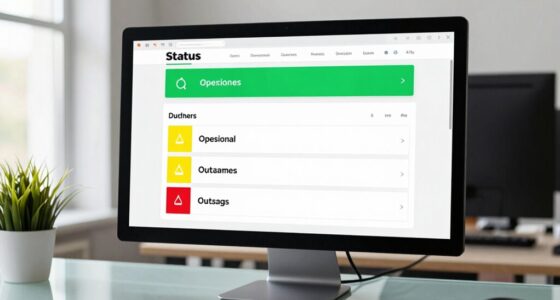
During a service incident, you need to share five key messages to keep your users informed and reassured. First, openly acknowledge the problem and specify affected services. Next, provide regular updates on progress, estimated resolution times, and any workarounds. Be transparent about root causes and steps taken to fix the issue. Finally, confirm when the issue is resolved and share lessons learned. Mastering these messages helps build trust—keep going to discover how to craft each one effectively.
Key Takeaways
- Clearly acknowledge the incident, specify impacted services, regions, and provide initial reassurance.
- Provide regular, timely updates on progress and next steps to keep customers informed.
- Share measurable indicators of recovery and available workarounds to reduce frustration.
- Confirm resolution, explain root causes simply, and outline corrective actions taken.
- Offer follow-up guidance, support contacts, and post-incident reports to build trust and accountability.

Have you ever wondered how companies keep you informed during service disruptions? When an incident occurs, the way they communicate can make all the difference in how you experience the situation. The first thing they do is acknowledge the problem openly, explaining which services, regions, or user groups are affected. They tell you right away whether the service is unavailable or just running slower, giving a clear timestamp of when the outage was first noticed. They also provide channels where you can get updates, like status pages or email notifications, so you know where to look for the latest information. If simple workarounds exist—like restarting your device or clearing your cache—they’ll mention those upfront, helping you reduce frustration while the issue is being fixed. They avoid technical jargon and steer clear of promising fix times, which can lead to false expectations. Effective communication during outages is crucial for maintaining customer trust and confidence. Throughout the incident, these companies maintain a steady flow of updates, often scheduled at regular intervals—say every 15 or 30 minutes—whether or not there’s new information. This consistency prevents radio silence, which can increase frustration and rumors. They use a central status page, emails, and social media to keep everyone informed, making sure the messages are short, clear, and include the next expected update window. If new facts emerge, the update cadence might increase; if things stabilize, they slow down the frequency. During progress updates, they share what investigations are underway, which teams are involved, and what specific actions are being taken. They include measurable indicators, like the percentage of affected systems recovered or error rates trending down, so you can see progress. If temporary workarounds are available, they tell you how to access them. They’re honest about uncertainties, providing conservative estimates for next steps to set realistic expectations. Additionally, understanding ear wax odor can help companies better communicate about health-related issues that might arise during incidents involving hygiene or sanitation. Once the issue is resolved, they send a clear message confirming all services are restored. They briefly explain the root cause in plain language, what corrective actions were taken, and how they verified the fix. They also guide you on any follow-up actions needed, like clearing your cache or re-subscribing, and provide contact info for ongoing support. After the incident, they publish a post-incident report with timelines, impact metrics, and lessons learned, showing accountability. They may outline long-term improvements and preventive measures, building trust for future incidents. To maintain trust, they’re consistent, transparent, and timely in their messaging, ensuring you’re informed and reassured every step of the way. This approach helps you understand what’s happening, reduces confusion, and makes the disruption less stressful.
Frequently Asked Questions
How Do Companies Decide What Information to Share Publicly?
You decide what to share publicly based on transparency, relevance, and impact. Focus on clear, factual info about the incident’s scope, current status, and steps being taken. Avoid technical jargon and promises about resolution times. Share updates regularly to keep your customers informed and trust intact. Always prioritize user understanding, provide guidance if needed, and guarantee your messaging reflects honesty while protecting sensitive details.
What Tools Are Best for Automating Incident Communications?
You should use incident management tools like PagerDuty, Opsgenie, or ServiceNow to automate communications. These platforms can trigger alerts, send scheduled updates, and update status pages automatically. You can also integrate chatbots or messaging APIs like Slack, MS Teams, or Twilio to send real-time notifications. Automating these steps guarantees consistent, timely updates, reducing manual effort while keeping customers informed throughout the incident.
How Can Teams Coordinate Message Consistency Across Channels?
Imagine a conductor leading an orchestra—each section must stay in sync for harmony. To coordinate message consistency across channels, you should establish clear roles, use standardized templates, and designate a single source of truth like a status page. Regularly synchronize updates through scheduled meetings or automated alerts, ensuring everyone stays aligned. This way, your team delivers unified, accurate information, reducing confusion and building trust during incidents.
When Is It Appropriate to Update Customers More Frequently?
You should update customers more frequently when new information emerges, the situation worsens, or progress is made. Increasing communication helps manage expectations and reduces uncertainty. For major outages or critical incidents, send updates every 15-30 minutes to keep everyone informed and prevent speculation. As the incident stabilizes, reduce update frequency to avoid overwhelming users. Consistent, transparent updates build trust and demonstrate your commitment to keeping customers informed.
How Do Organizations Handle Sensitive or Confidential Incident Details?
You should handle sensitive incident details carefully by confirming what info can be shared without breaching confidentiality or legal boundaries. Always stick to facts, avoiding speculation or revealing proprietary data. Use clear, plain language to explain the impact, but don’t disclose technical specifics that could compromise security. When in doubt, consult your legal or security teams to ensure you protect customer trust and comply with confidentiality policies.
Conclusion
So, next time chaos strikes, remember these five messages. Because nothing says “we care” more than sounding like you’ve got it all under control—especially when you don’t. Keep your updates consistent, transparent, and maybe throw in a dash of humor. After all, if your customers are going to endure the inconvenience, they might as well enjoy the show. Stay communicative, stay human, and maybe, just maybe, you’ll survive the storm with style.