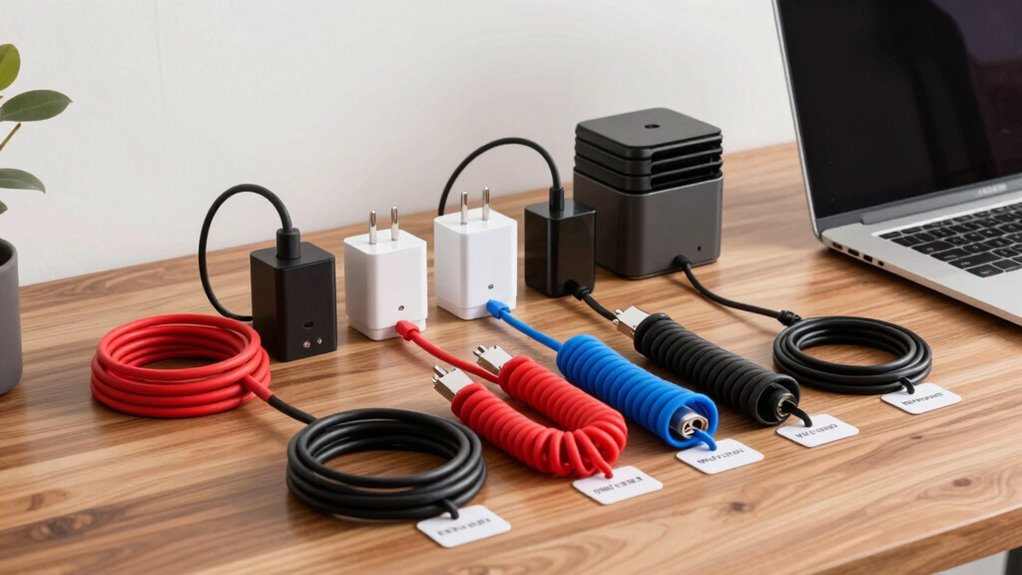

To standardize cables, chargers, and accessories across your teams, start by adopting universal standards like wireless charging and universal adapters that support multiple protocols. Implement clear policies on preferred accessories and promote the use of centralized charging stations to minimize clutter and prevent damage. Communicate the benefits and provide training to encourage adoption. By setting these guidelines, you’ll streamline operations and extend equipment lifespan—more insights await if you explore further.

Get business pricing on networking and server gear
- Business-only prices and quantity discounts
- Tax-exempt purchasing
- Multiple users, one account, clear invoices
Key Takeaways
- Implement universal standards such as USB-C for cables and chargers to ensure cross-device compatibility.
- Promote wireless charging stations and universal adapters to reduce cable clutter and simplify logistics.
- Establish clear policies on preferred charging methods, accessories, and maintenance procedures.
- Centralize charging infrastructure with standardized stations to streamline access and reduce downtime.
- Conduct training and regular communication to encourage team adoption of standardized cables and charging protocols.
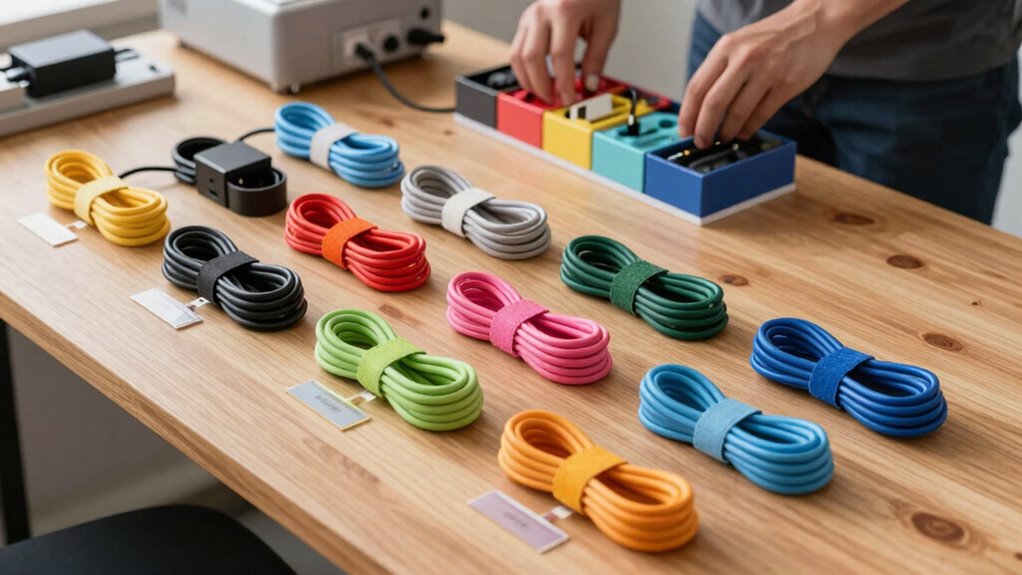
In today’s world, where nearly every device relies on charging, the lack of standardization for cables and chargers creates unnecessary inconvenience. You’ve probably experienced the frustration of searching for the right cable or adapter when you need to power up your device quickly. To streamline this process across teams, adopting a standardized approach is essential. Wireless charging technology has gained popularity because it reduces the clutter of multiple cables. Encouraging team members to use wireless charging pads or stations can eliminate the need for specific cables, making charging more straightforward and universal. This shift not only simplifies logistics but also minimizes the risk of losing or damaging individual cables.
Standardizing charging methods simplifies logistics, reduces clutter, and minimizes device damage in today’s tech-reliant environment.
Alongside wireless charging, implementing universal adapters is a practical step toward standardization. Universal adapters support multiple device types and charging protocols, allowing your team to use a single adapter for smartphones, tablets, and other gadgets. This reduces the number of accessories needed and ensures compatibility across devices. When selecting universal adapters, focus on those that support fast charging standards and multiple port options, so everyone can charge their devices efficiently without needing multiple accessories. Standardized adapters also make it easier to manage inventory, reduce costs, and ensure everyone has access to reliable charging tools.
To effectively establish these standards within your team, start by setting clear policies that specify preferred charging methods and accessories. Communicate the benefits of wireless charging and universal adapters to foster buy-in. Providing team members with recommended devices or accessories can help ensure consistency. It’s also crucial to establish guidelines for maintenance and replacement of chargers and cables, so the equipment remains reliable and safe to use. Incorporating training sessions to familiarize everyone with new charging protocols and demonstrate how to utilize wireless chargers and universal adapters properly. Promoting the use of standardized accessories can further enhance consistency and efficiency across the team. Additionally, understanding the importance of device compatibility can help prevent issues related to incompatible charging systems. Establishing clear policies ensures everyone adheres to the standardized system, reinforcing the benefits of a unified approach. Implementing a training program can also support ongoing compliance and adaptation to new technology standards.
Furthermore, centralizing charging stations equipped with wireless chargers and universal adapters can significantly improve efficiency. When everyone knows where to find reliable charging options, it minimizes downtime and confusion. Encourage team members to adopt these standardized tools by emphasizing their convenience and cost-saving benefits. Over time, this approach can cultivate a culture of standardization, reducing the clutter of multiple incompatible cables and adapters. This not only enhances productivity but also extends the lifespan of devices and accessories by preventing damage caused by incompatible or poor-quality chargers.
As an affiliate, we earn on qualifying purchases.
Frequently Asked Questions
How Do I Handle Existing Incompatible Cables and Chargers?
To handle existing incompatible cables and chargers, first assess cable compatibility and identify which items don’t meet your standard. Then, gradually phase out charger diversity by replacing incompatible cables and chargers with standardized ones. Communicate the benefits to your team, offer easy-to-access replacement options, and set clear deadlines. This approach guarantees smoother shifts, reduces clutter, and promotes consistent, reliable charging solutions across your team.
What Are the Best Practices for Inventory Management?
Did you know that effective inventory tracking can reduce equipment loss by up to 30%? To optimize your inventory management, implement clear labeling and regular audits. Use organized storage solutions like labeled bins or shelves to keep cables, chargers, and accessories accessible and sorted. Keep digital records updated to monitor quantities and usage, ensuring you avoid overstocking or shortages. These practices streamline access and help maintain consistency across your teams.
How Can We Train Team Members on New Standards?
You should organize training sessions to introduce your team to the new standards, making sure everyone understands the importance of consistency. Use clear, detailed standard operating procedures to guide them through the process. Encourage questions and hands-on practice during these sessions, and provide accessible reference materials. Regular follow-ups will reinforce the standards, ensuring team members stay aligned and confident in managing cables, chargers, and accessories consistently across all teams.
What Are Cost-Effective Options for Standardization?
To keep costs friendly while ensuring compatibility, focus on selecting cables with universal compatibility, which minimizes the need for multiple types. Opt for chargers with consistent branding, making procurement and replacements easier. Consider bulk purchasing or negotiating group discounts, and explore reliable third-party options that meet quality standards. This approach simplifies maintenance, reduces clutter, and promotes a cohesive look, all without stretching your budget.
How Do We Update or Replace Outdated Accessories?
You should first evaluate accessory compatibility with current devices to determine which items need updating. Establish clear replacement procedures that include checking for outdated accessories, sourcing compatible alternatives, and making sure team members follow the standardized process. Communicate these procedures effectively, and regularly review accessory inventories to prevent compatibility issues. This approach helps you maintain consistency, reduce downtime, and ensure all accessories meet your organization’s standards.
wireless charging station for multiple devices
As an affiliate, we earn on qualifying purchases.
As an affiliate, we earn on qualifying purchases.
Conclusion
By standardizing cables, chargers, and accessories, you’re not just streamlining your team’s workflow—you’re building a unified foundation that supports growth and adaptability. Think of these tools as the threads weaving your team’s fabric tighter, stronger, and more resilient against chaos. When everyone’s on the same page, your organization becomes a well-oiled machine, ready to face any challenge. Embrace this change, and watch how your collective efficiency and harmony flourish like a well-tended garden.
universal travel adapter with fast charging
As an affiliate, we earn on qualifying purchases.
As an affiliate, we earn on qualifying purchases.
As an affiliate, we earn on qualifying purchases.
Columbus Day / Indigenous Peoples' Day Picks
long weekend sales
As an affiliate, we earn on qualifying purchases.