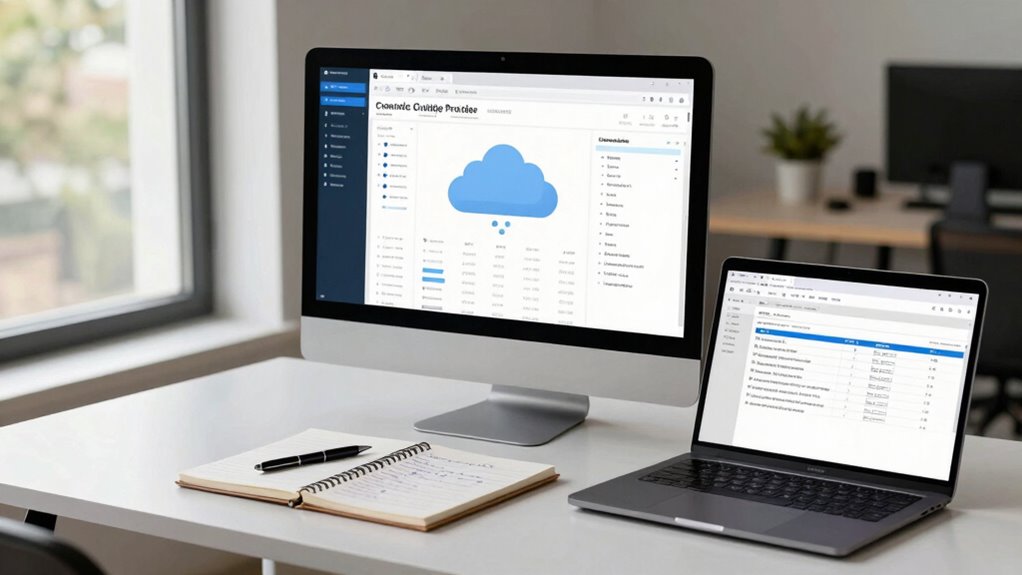

To review cloud privileges without sparking political fights, approach the process as a team effort focused on security, not blame. Frame reviews as improvements to protect everyone’s work, emphasizing shared responsibility and transparency. Engage stakeholders early, clearly explain the benefits, and listen to concerns to foster collaboration. By aligning reviews with organizational policies and demonstrating respect, you can build trust and reduce conflicts. If you want to learn more about creating a smooth review process, keep exploring these strategies.
Key Takeaways
- Frame privilege reviews as security improvements, emphasizing risk reduction rather than assigning blame.
- Engage stakeholders early, highlighting collaborative benefits and shared responsibility for maintaining security.
- Communicate transparently, focusing on policies and best practices rather than individual shortcomings.
- Use automated tools to objectively identify excess permissions, minimizing subjective conflicts.
- Foster a culture of trust and continuous improvement, viewing reviews as team efforts rather than punitive measures.

Have you ever wondered if your cloud privileges are properly aligned with your security policies? Keeping your cloud environment secure requires more than just setting permissions and hoping for the best. It calls for a thorough review of access management to guarantee that only the right people have the right access at the right times. When you regularly audit your cloud privileges, you reduce the risk of data breaches, insider threats, and accidental mishaps. But this process can sometimes feel like walking a tightrope—too aggressive, and you risk upsetting teams; too lax, and you leave vulnerabilities open. The key is to approach this review with clarity, transparency, and a focus on security.
Regular cloud privilege reviews balance security and team harmony, safeguarding data without disrupting workflows.
Start by understanding your current access management setup. What roles exist? Who has access to what resources? Many organizations rely on role-based access control (RBAC), which simplifies permissions, but it’s essential to verify that those roles are still relevant and correctly assigned. Keep in mind that cloud security isn’t a set-and-forget task. As your organization evolves, so do the access needs. Regularly reviewing these permissions assures you’re not granting excessive privileges to users who no longer need them. It’s a good idea to run audits that identify dormant or outdated accounts and remove or update them accordingly. Incorporating automated access reviews can greatly enhance the efficiency and accuracy of this process. Additionally, understanding the security policies that govern your cloud environment helps ensure your access controls remain aligned with compliance standards. Regular updates to your policies can help adapt to changing threats and organizational changes. Recognizing cloud-specific threats during reviews further strengthens your security posture, especially as new vulnerabilities emerge and evolve.
Communication is vital when reviewing privileges. Instead of framing the process as a crackdown, present it as a way to strengthen security and protect everyone’s work. You can highlight how proper access management minimizes risks and assures compliance with industry standards. When you involve stakeholders and explain the importance of securing cloud resources, you’re less likely to encounter resistance. Plus, collaboratively reviewing access helps uncover potential gaps or oversights that you might miss alone. Ensuring everyone understands the importance of access control fosters a security-conscious culture within your organization.
Leverage automation tools to streamline this process. Many cloud providers and third-party solutions offer automated access reviews, which can flag anomalies or overly broad permissions. By automating these checks, you free up time for more strategic tasks while maintaining a high security standard. Remember, the goal isn’t just to revoke access but to implement a principle of least privilege—giving users only what they need to do their jobs, nothing more. This approach minimizes potential damage if credentials are compromised.
In the end, maintaining proper cloud security through diligent access management isn’t about creating barriers; it’s about building trust in your cloud environment. When you regularly review privileges, you demonstrate a proactive stance on security that protects your organization and your users. Approaching this task with transparency and a collaborative mindset helps you avoid conflicts and fosters a culture where security is everyone’s responsibility. Consistent access management practices help ensure that security remains a shared priority across your organization.
As an affiliate, we earn on qualifying purchases.
Frequently Asked Questions
How Often Should Cloud Privileges Be Reviewed?
You should review cloud privileges at least quarterly to prevent privilege escalation and guarantee role-based access remains appropriate. Regular reviews help you identify and revoke unnecessary permissions, reducing security risks. By consistently monitoring access controls, you maintain a strong security posture and limit potential breaches. Keep in mind, frequent reviews are key to adapting to role changes and minimizing the chance of privilege escalation within your cloud environment.
What Tools Are Best for Auditing Cloud Permissions?
You should use tools like AWS IAM Access Analyzer, Azure Security Center, or Google Cloud IAM Policy Troubleshooter to audit cloud permissions. These tools help you review access controls and role management effectively, identifying overly permissive privileges. They provide actionable insights, making it easier to enforce the principle of least privilege. Regular audits with these tools minimize security risks without causing conflicts, ensuring your cloud environment stays secure and compliant.
How to Handle Conflicting Privilege Requests?
Nearly 60% of privilege conflicts stem from role escalation requests. When handling conflicting privilege requests, you should foster cross-team collaboration to understand each side’s needs. Clearly define roles and permissions upfront, then mediate disagreements by emphasizing shared security goals. Actively listen, clarify misunderstandings, and seek compromise. This approach minimizes political friction, guarantees fair privilege distribution, and keeps your cloud environment secure and well-managed.
Can Automated Scripts Replace Manual Privilege Reviews?
Automated scripts can markedly streamline privilege reviews by continuously monitoring for privilege escalation and enforcing access control policies. They quickly identify irregular access patterns and flag potential risks, reducing the need for manual checks. However, scripts shouldn’t fully replace manual reviews, as human oversight ensures context-specific decisions and prevents false positives. Combining automation with periodic manual audits offers the most effective way to maintain secure, well-managed cloud privileges.
What Are Common Mistakes in Privilege Management?
Don’t let complacency be your downfall. A common mistake in privilege management is overlooking role escalation risks and skipping regular access audits. You might assume privileges are safe, but unchecked role escalations can lead to serious security gaps. Regularly reviewing user roles, monitoring for unnecessary access, and conducting audits help prevent privilege creep. Stay vigilant, keep policies updated, and remember, a little oversight can turn into a big headache.
automated cloud privilege review software
As an affiliate, we earn on qualifying purchases.
As an affiliate, we earn on qualifying purchases.
Conclusion
Reviewing cloud privileges thoughtfully can be your secret weapon for a harmonious environment. By gently shining a light on access levels, you create a space where trust and collaboration flourish. Remember, a well-tuned privilege system isn’t about pointing fingers but about nurturing a secure, efficient setup. Embrace this proactive approach, and you’ll find that safeguarding your cloud isn’t just a task—it’s a subtle art that benefits everyone involved.
role-based access control (RBAC) solutions
As an affiliate, we earn on qualifying purchases.
As an affiliate, we earn on qualifying purchases.

SOC2 Cloud Compliance Mastery: Master SOC 2 For Cloud Tools | Secure Collaboration Fast | SOC 2 Controls Simplified | Trusted Compliance Blueprint | Fast-Track Cloud Compliance | SOC 2 For SaaS
As an affiliate, we earn on qualifying purchases.
As an affiliate, we earn on qualifying purchases.