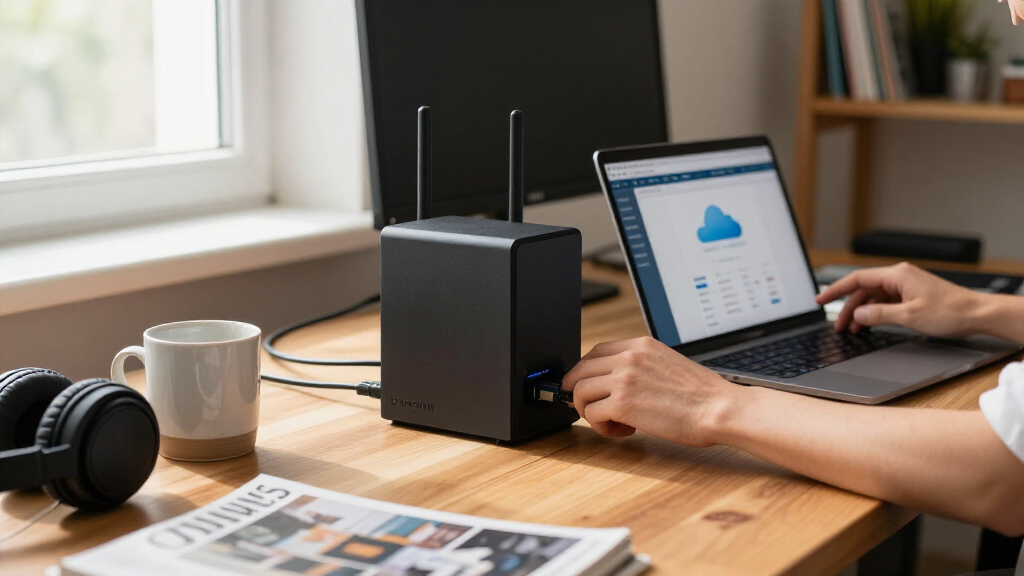

Network attached storage devices put shared files, backups, and media on your home or office network, but they differ in capacity, software, speed, and setup demands. My best overall pick is the UGREEN DXP2800, a flexible two-bay option for buyers who want room to grow beyond a single drive. The Synology DS225+ stands out for a more capable media and backup setup, while the Synology DS223j is a simpler route into a two-drive system. The central tradeoff is between easy, low-maintenance storage and the added capacity, performance, and management work of a larger NAS. Read on for the full comparison, selection criteria, and advice on matching a device to your storage needs.

Get business pricing on networking and server gear
- Business-only prices and quantity discounts
- Tax-exempt purchasing
- Multiple users, one account, clear invoices
Key Takeaways
- Two bays are the practical starting point for many homes: They allow mirrored drive setups, while the one-bay Buffalo LinkStation and Synology DS124 lack that in-device drive redundancy.
- The UGREEN DXP2800 leads for flexible home storage: Its two-bay design offers a useful balance of expansion and manageable size compared with larger four-bay models.
- Synology’s strongest distinction is its software-led approach: The DS225+ suits buyers who want a more capable media and backup platform; the DS223j is a simpler, more modest alternative.
- Four-bay models answer a different need: The UGREEN DXP4800 Plus, UGREEN DXP4800 GT, and QNAP TS-462A-4G make more sense when capacity, workload growth, or team use justify the extra footprint and setup.
- Included drives trade choice for convenience: The Buffalo LinkStation 210 models arrive with storage installed, while diskless NAS options let buyers choose drive capacity and replace drives more freely.
| Yxk Zero1 2-Bay Desktop NAS for Home & Personal Storage (Diskless) |  | Best for Beginner-Friendly 2.5GbE Storage | Drive bays: 2 | Drive status: Diskless | RAM: 4GB | VIEW LATEST PRICE | See Our Full Breakdown |
| ASUSTOR Drivestor 2 Gen 2 AS1202T 2-Bay Diskless NAS |  | Best for Straightforward Two-Bay Backups | Drive bays: 2 | Drive included: No | Processor: Realtek RTD1619B quad-core, 1.7GHz | VIEW LATEST PRICE | See Our Full Breakdown |
| UGREEN DXP2800 2-Bay Diskless NAS |  | Best Two-Bay NAS for Apps and NVMe Caching | Processor: Intel N100 quad-core | Memory: 8GB DDR5 | HDD bays: 2 | VIEW LATEST PRICE | See Our Full Breakdown |
| UGREEN DXP4800 Plus 4-Bay NAS |  | Best for High-Capacity, Fast Network Storage | Drive bays: 4 | Maximum listed capacity: 144TB with compatible drives in RAID 0 | Processor: Intel 5-core CPU | VIEW LATEST PRICE | See Our Full Breakdown |
| BUFFALO LinkStation 210 4TB 1-Bay NAS with Hard Drive |  | Best Ready-to-Use NAS for Basic Backups | Model: LS210D0401 | Capacity: 4TB | Drive bays: 1 | VIEW LATEST PRICE | See Our Full Breakdown |
| Western Digital My Book World Edition 1TB Network Storage System (WDG1NC10000N) |  | Best for a Simple Ready-to-Use NAS | Device type: NAS server | Storage capacity: 1TB (1024GB) | Drive configuration: 1 × 1TB standard HDD | VIEW LATEST PRICE | See Our Full Breakdown |
| Buffalo LinkStation 210 2TB 1-Bay NAS with Included Hard Drive |  | Best for Plug-In Personal Cloud Storage | Storage capacity: 2TB | Drive bays: 1 | Hard drive: Included | VIEW LATEST PRICE | See Our Full Breakdown |
| UGREEN DH2300 2-Bay NAS for Personal Storage and Device Backups |  | Best for Cross-Device Personal Backups | Drive bays: 2 | Maximum storage capacity: Up to 64TB | Drive inclusion: Drives not included | VIEW LATEST PRICE | See Our Full Breakdown |
| Synology DS124 1-Bay Diskless NAS |  | Best Compact Synology Starter | Brand: Synology | Model: DS124 | Drive bays: 1 | VIEW LATEST PRICE | See Our Full Breakdown |
| Synology DiskStation DS223j 2-Bay NAS Enclosure (Diskless) |  | Best for a Two-Drive Synology Home Setup | Brand: Synology | Model: DS223j | Drive bays: 2 | VIEW LATEST PRICE | See Our Full Breakdown |
| Synology DS225+ 2-Bay Diskless NAS Media Server |  | Best for Home Media and Backups | Model: DS225+ | Drive bays: 2 | Drive configuration: Diskless | VIEW LATEST PRICE | See Our Full Breakdown |
| QNAP TS-462A-4G 4-Bay Desktop NAS |  | Best for Expandable Media Storage | CPU: Intel quad-core, up to 2.9 GHz | Graphics: Intel UHD Graphics with hardware transcoding | Network: Built-in 2.5GbE | VIEW LATEST PRICE | See Our Full Breakdown |
| UGREEN NAS DXP4800 GT 4-Bay for Creators, Tech Enthusiasts and Office Teams |  | Best for High-Speed Creator Workflows | Processor: AMD Ryzen Embedded R2514, 4 cores, 8 threads, up to 3.70 GHz | Memory: 8 GB DDR4, expandable to 64 GB; stock memory is non-ECC | Networking: Dual 10GbE ports; up to 20 Gbps with Link Aggregation | VIEW LATEST PRICE | See Our Full Breakdown |
| network attached storage device | Drive bays | Warranty |
|---|---|---|
| Yxk Zero1 2-Bay Desktop NAS fo | 2 | 2 years |
| ASUSTOR Drivestor 2 Gen 2 AS12 | 2 | — |
| UGREEN DXP2800 2-Bay Diskless | — | 2 years |
| UGREEN DXP4800 Plus 4-Bay NAS | 4 | 2 years |
| BUFFALO LinkStation 210 4TB 1- | 1 | 2 years, including hard drive |
| Western Digital My Book World | — | 3-year limited |
| Buffalo LinkStation 210 2TB 1- | 1 | 2 years, including hard drive |
| UGREEN DH2300 2-Bay NAS for Pe | 2 | — |
| Synology DS124 1-Bay Diskless | 1 | 2 years |
| Synology DiskStation DS223j 2- | 2 | 2 years |
| Synology DS225+ 2-Bay Diskless | 2 | 3 years |
| QNAP TS-462A-4G 4-Bay Desktop | 4 x 3.5-inch SATA, tool-less hot-swap | 3 years |
| UGREEN NAS DXP4800 GT 4-Bay fo | 4 SATA bays, up to 32 TB each | — |
More Details on Our Top Picks
Yxk Zero1 2-Bay Desktop NAS for Home & Personal Storage (Diskless)
The Yxk Zero1 suits home users who want a private file hub without starting with a bare-bones network drive. Its 2.5GbE connection can speed up transfers on a compatible network, while remote access and a beginner-friendly setup help make shared photos, videos, and files reachable across devices. Compared with the ASUSTOR Drivestor 2 Gen 2, the Zero1 lists 4GB of RAM rather than 1GB and adds Docker support, giving it more room for apps and background tasks. That extra flexibility may appeal to curious home users, though it also means more features to configure than simple backup needs require. The tradeoff is a two-bay limit, and the diskless design means drives are a separate purchase. I’d choose it for a compact starter NAS, not for a growing media archive that needs multiple drive bays.
Pros:- Beginner-friendly setup with remote access for personal files
- 2.5GbE networking for faster transfers on compatible equipment
- 4GB RAM and Docker support offer more app flexibility than the ASUSTOR Drivestor 2 Gen 2
- Compact, quiet design with built-in thermal control
Cons:- Diskless package requires a separate drive purchase
- Two bays offer less room to expand than the UGREEN DXP4800 Plus
Best for: Home users who want straightforward remote file access, faster-than-Gigabit networking, and room to try Docker applications.
Not ideal for: Households building a large or rapidly growing media archive, since two drive bays limit expansion and drives are not included.
- Drive bays:2
- Drive status:Diskless
- RAM:4GB
- Network:2.5GbE
- HDMI:4K HDMI
- Docker support:Yes
- Weight:2kg
- Warranty:2 years
Our verdict“Choose the Zero1 for an approachable home NAS with 2.5GbE and Docker, but look to a four-bay model if your storage needs are likely to grow.”
ASUSTOR Drivestor 2 Gen 2 AS1202T 2-Bay Diskless NAS
The ASUSTOR Drivestor 2 Gen 2 is a practical pick for buyers focused on backups, shared folders, and personal-cloud access rather than running a busy collection of apps. Its quad-core 1.7GHz processor and 2.5GbE port provide a capable foundation for everyday storage and compatible 4K media use. Tool-free drive installation also makes adding disks less fussy than on NAS units that require more involved fitting. Compared with the Yxk Zero1, the ASUSTOR has only 1GB of memory and its listed features are less geared toward Docker experimentation, so it is the more restrained choice. That simplicity has limits: demanding multitasking has less memory headroom, and the diskless package leaves drive selection and setup to the buyer. I’d shortlist it for routine home backups, not for someone who wants an expandable app or virtualization platform.
Pros:- 2.5GbE Ethernet supports faster transfers on a compatible network
- Tool-free drive installation simplifies fitting disks
- Quad-core processor is suited to file storage and background tasks
- Supports backup, personal-cloud, and 4K media-server use
Cons:- 1GB DDR4 memory limits headroom for demanding multitasking
- Drives are not included, so storage setup requires a separate purchase
Best for: Home users setting up a two-drive backup and personal-cloud system who value simple, tool-free drive installation.
Not ideal for: NAS tinkerers running several applications or heavier workloads, since its 1GB of memory offers less headroom than the Yxk Zero1 or UGREEN DXP2800.
- Drive bays:2
- Drive included:No
- Processor:Realtek RTD1619B quad-core, 1.7GHz
- Memory:1GB DDR4
- Network:2.5GbE Ethernet
- USB ports:3
- Operating system:ASUSTOR Data Master (ADM)
- Drive installation:Tool-free
Our verdict“Pick the ASUSTOR for ordinary two-bay backups and personal-cloud use, but choose a higher-memory model for app-heavy workloads.”
UGREEN DXP2800 2-Bay Diskless NAS
The UGREEN DXP2800 packs features for users who want a home NAS to do more than hold backup copies. Its Intel N100 processor and 8GB DDR5 RAM support a broader mix of Docker, virtual machines, and media-server apps than the more storage-focused ASUSTOR Drivestor 2 Gen 2. Two M.2 NVMe slots add a way to use SSDs alongside the two HDD bays, while 2.5GbE provides a faster network link than standard Gigabit Ethernet when the rest of the setup supports it. Photo organization and surveillance functions widen its appeal for creators and connected homes. The tradeoff is a steeper feature set than many basic backup users need, and neither HDDs nor SSDs are included. Its two HDD bays also provide less expansion room than the four-bay DXP4800 Plus. I’d favor it when app flexibility matters more than adding several hard drives.
Pros:- Intel N100 and 8GB DDR5 RAM support Docker, virtual machines, and media applications
- Two NVMe slots complement the two HDD bays
- 2.5GbE networking supports faster transfers on compatible networks
- Photo organization and compatible surveillance features extend its uses
Cons:- HDDs and SSDs must be purchased separately
- Advanced features can add setup complexity for basic home backup users
- Two HDD bays provide less expansion than the UGREEN DXP4800 Plus
Best for: Creators and technically curious home users who want a two-bay storage system for backups, Docker apps, media, or compatible cameras.
Not ideal for: Buyers seeking a simple plug-in backup appliance or large multi-drive growth path; it is diskless, feature-rich, and limited to two HDD bays.
- Processor:Intel N100 quad-core
- Memory:8GB DDR5
- HDD bays:2
- M.2 slots:2 NVMe
- Networking:2.5GbE
- Maximum listed storage capacity:Up to 80TB
- Drive status:Diskless; HDDs and SSDs sold separately
- Warranty:2 years
Our verdict“Choose the DXP2800 if you want apps and NVMe options in a compact two-bay NAS, not if your priority is simple setup or more HDD bays.”
UGREEN DXP4800 Plus 4-Bay NAS
The UGREEN DXP4800 Plus is the lineup’s strongest fit for buyers planning a substantial shared archive or a busier home-office NAS. Four drive bays give it more room to build capacity than the two-bay DXP2800, and the listed 10GbE and 2.5GbE ports offer more network flexibility than the other products here. Its 8GB DDR5 RAM and Docker and virtual-machine support also suit workloads beyond basic file sharing. A 128GB SSD is included, but the main storage drives are not; the stated maximum capacity depends on compatible drives and RAID configuration. The advertised transfer ceiling also relies on suitable network and connected hardware, so the faster port alone does not guarantee those speeds. Compared with the BUFFALO LinkStation 210, this is a far more configurable system, but it demands more setup and drive planning. I’d pick it for expansion and network capability, not simplicity.
Pros:- Four bays allow more drive capacity than the DXP2800’s two HDD bays
- 10GbE and 2.5GbE ports suit different network setups
- 8GB DDR5 RAM with Docker and virtual-machine support
- Includes a 128GB SSD and supports multiple desktop and mobile platforms
Cons:- Main hard drives are not included
- Capacity and transfer performance depend on drive, RAID, and network choices
- More configuration and hardware planning than the BUFFALO LinkStation 210
Best for: Power users, creators, and small teams who need four-bay storage, faster networking options, and support for containers or virtual machines.
Not ideal for: Buyers seeking an inexpensive-to-set-up, included-drive backup appliance; this NAS requires separate main drives and benefits from compatible 10GbE equipment.
- Drive bays:4
- Maximum listed capacity:144TB with compatible drives in RAID 0
- Processor:Intel 5-core CPU
- Memory:8GB DDR5
- Network ports:1 x 10GbE; 1 x 2.5GbE
- Included storage:128GB SSD
- Maximum listed transfer rate:1250MB/s
- Drive form factors:2.5-inch and 3.5-inch
- Warranty:2 years
Our verdict“Choose the DXP4800 Plus for expandable storage and faster-network potential, provided you are prepared to supply drives and configure the system.”
BUFFALO LinkStation 210 4TB 1-Bay NAS with Hard Drive
The BUFFALO LinkStation 210 takes a simpler route than the diskless NAS units in this roundup: it includes a 4TB hard drive, so buyers can start with shared storage and automated backups without selecting a drive first. Folder access controls and SSL-encrypted file transfers add useful protections for household files, while subscription-free personal-cloud access suits people who want files available beyond their home network. Compared with the UGREEN DXP2800, the LinkStation is less suited to Docker, virtual machines, or storage expansion; its appeal is a more direct path to basic backup and sharing. The biggest limitation is its single drive bay, which restricts capacity growth within the device. Its stated macOS compatibility ends at version 15 and earlier, so newer-version users should check compatibility before buying. I’d choose it for uncomplicated backups, not as a platform for a growing media library.
Pros:- Includes a 4TB hard drive for a more ready-to-use setup
- Supports automated backups for multiple computers
- Subscription-free personal-cloud and shared-storage functions
- Folder access controls and SSL-encrypted file transfers
Cons:- Single drive bay limits storage expansion compared with the two-bay NAS options
- Listed macOS compatibility covers version 15 and earlier
Best for: Households and individual computer users who want a basic shared-storage and automated-backup device with a drive already installed.
Not ideal for: Users who need multi-drive expansion, app flexibility, or confirmed compatibility with macOS versions newer than 15.
- Model:LS210D0401
- Capacity:4TB
- Drive bays:1
- Hard drive:Included
- Compatibility:Windows and macOS 15 and earlier
- Support:24/7 US-based support
- Warranty:2 years, including hard drive
- File transfer security:SSL encryption
Our verdict“Choose the LinkStation 210 for straightforward backups with included storage, but choose a diskless multi-bay NAS if you need room to expand.”
Western Digital My Book World Edition 1TB Network Storage System (WDG1NC10000N)
The My Book World Edition is a straightforward choice for a household or small workgroup that wants a network drive with backup and remote access already part of the package. Its included 1TB hard drive means there is no separate drive purchase before setup, unlike the diskless Synology DS124 and DS223j. Gigabit Ethernet gives it a wired connection suited to moving files across a home network, while bundled backup software supports scheduled and on-demand copies.
The tradeoff is its single 1TB drive: it offers less capacity than the Buffalo LinkStation 210 2TB and no second bay for expansion. Its listed PC compatibility also makes it a less flexible fit for mixed-device households than newer options with broader platform support. I’d choose it for basic file sharing and backups, not for a growing media library or advanced NAS features.
Pros:- Includes a 1TB hard drive, so it is ready for storage without sourcing a separate disk
- Remote file access is available even when a local computer is off
- Bundled EMC Retrospect Express supports scheduled and on-demand backups
- Gigabit Ethernet and quiet convection cooling suit an always-connected desktop setup
Cons:- One 1TB drive provides less capacity and expansion flexibility than the Buffalo LinkStation 210 2TB
- Compatibility details specify PC platforms, making it a less clear choice for mixed Windows and macOS households
- Listed weight is around 4 lb, relatively heavy for a compact desktop NAS
Best for: PC-using households or small workgroups that want an included drive, basic scheduled backups, and remote file access.
Not ideal for: Buyers who need more than 1TB, multi-drive expansion, broad modern device support, or advanced NAS applications.
- Device type:NAS server
- Storage capacity:1TB (1024GB)
- Drive configuration:1 × 1TB standard HDD
- Network:Ethernet, Fast Ethernet, Gigabit Ethernet (10/100/1000)
- Additional connectivity:USB
- Dimensions:2.2 × 5.6 × 6.8 inches
- Weight:2.6 lb listed; 4 lb item weight
- Warranty:3-year limited
Our verdict“Choose this for basic PC backups and remote access in a ready-to-use 1TB package, but skip it if you need room to grow.”
Buffalo LinkStation 210 2TB 1-Bay NAS with Included Hard Drive
The Buffalo LinkStation 210 2TB fits buyers who want centralized storage without buying a drive separately or paying for a personal-cloud subscription. Its included 2TB drive doubles the My Book World Edition’s listed capacity, and automated backup software helps gather files from multiple computers in one place. SSL encryption and a closed system add a layer of protection for file access and sharing.
That simplicity comes with a firm ceiling: this is a one-bay NAS, so the drive cannot be joined by a second internal disk for added capacity or redundancy. The diskless Synology DS223j offers two bays, but requires buyers to supply their own drives. Buffalo also lists support for macOS 15 and earlier, so I’d avoid it for a Mac already running macOS 26. For compatible Windows and Mac systems, its included drive and support coverage make setup less involved.
Pros:- Includes a 2TB hard drive, twice the listed capacity of the WD My Book World Edition
- Subscription-free personal cloud supports remote access and file sharing
- Automated backup software centralizes copies from multiple devices
- Includes 24/7 US-based support and a 2-year warranty covering the hard drive
Cons:- Single drive bay limits internal expansion and multi-drive configurations
- macOS 26 is not supported; compatibility is listed through macOS 15
- The included drive means buyers cannot choose their own drive configuration at purchase
Best for: Windows and macOS 15-or-earlier households that want an included 2TB drive, automatic backups, and subscription-free remote access.
Not ideal for: Mac users on macOS 26, or buyers who want multiple drive bays for expansion or a multi-drive setup.
- Storage capacity:2TB
- Drive bays:1
- Hard drive:Included
- Compatible operating systems:Windows and macOS 15 and earlier
- Network connection:Connects to router
- Security:Closed system and SSL encryption
- Support:24/7 US-based support
- Warranty:2 years, including hard drive
Our verdict“Pick the LinkStation 210 if you want a supported, subscription-free 2TB personal cloud for compatible computers and can live with one bay.”
UGREEN DH2300 2-Bay NAS for Personal Storage and Device Backups
The UGREEN DH2300 is aimed at people collecting photos, videos, and backups from phones as well as computers. Its two drive bays and stated support for up to 64TB give it more room to grow than the single-bay Buffalo LinkStation 210, while automatic backup support spans Windows, macOS, iOS, and Android. AI photo tagging and duplicate detection can also make a large personal library easier to sort through.
Unlike Buffalo’s ready-to-use unit, the DH2300 is diskless, so buyers must supply compatible SATA drives and account for that setup. Its 1GbE connection is wired only; Wi-Fi requires an external USB adapter, and the device does not support Docker or virtual machines. Those limits separate it from NAS options intended for server applications. I’d choose it for personal storage and device backups, not for running a home lab or business services.
Pros:- Two bays and support for up to 64TB offer more expansion headroom than the single-bay Buffalo LinkStation 210
- Automatic backups support Windows, iOS, Android, and macOS devices
- AI photo tagging and duplicate detection help organize personal photo collections
- RAID modes, two-factor authentication, permissions, and encrypted transfers are listed
Cons:- Drives are not included, so storage requires a separate drive purchase and setup
- No built-in Wi-Fi; wireless networking requires an external USB adapter
- Docker and virtual machines are unsupported, limiting use for server applications
Best for: Households backing up photos and files from a mix of phones, tablets, and computers that want two bays and room for a large library.
Not ideal for: NAS tinkerers who need Docker or virtual machines, users who require built-in Wi-Fi, or buyers who want an included drive.
- Drive bays:2
- Maximum storage capacity:Up to 64TB
- Drive inclusion:Drives not included
- Memory:4GB RAM
- Ethernet:1GbE
- Maximum file transfer speed:Up to 125MB/s
- Drive interface and form factor:SATA, 3.5-inch
- Connectivity:Ethernet, HDMI, SATA, USB
- Docker and virtual machines:Not supported
Our verdict“Choose the DH2300 for expandable, cross-device personal backups and photo organization, but not for a ready-to-use or server-focused NAS.”
Synology DS124 1-Bay Diskless NAS
The Synology DS124 is a compact entry point for buyers who want Synology DSM features for file access, sharing, and backups without paying for a second bay they may not use. Its private-cloud and surveillance solutions are described as license-free, making it a fit for households that want remote access or a basic home-camera setup without recurring software license fees. Compared with the Synology DS223j, the DS124 uses one bay, so it takes up a simpler role in a small storage plan.
The other side of that compact design is limited flexibility. It is diskless, requiring a separate drive, and its single bay does not provide a second slot for expansion or a multi-drive configuration. The Buffalo LinkStation 210 is more convenient for buyers who want storage included, while the DS124 suits those who prefer to select their own drive and use Synology’s software environment. I’d keep expectations focused on personal storage rather than a growing multi-disk library.
Pros:- Synology DSM supports file backup, organization, access, and sharing
- License-free private-cloud and home-surveillance solutions are listed
- Compact one-bay design suits a small personal storage setup
- Includes a 2-year warranty
Cons:- Diskless enclosure requires a separate compatible drive
- One bay offers less expansion flexibility than the two-bay Synology DS223j
- Does not provide the included storage offered by the Buffalo LinkStation 210
Best for: Home users who want a compact Synology-based private cloud, phone and computer backups, or license-free home surveillance with a drive of their choice.
Not ideal for: Buyers who want storage included, need multiple bays, or expect their NAS capacity to expand across several internal drives.
- Brand:Synology
- Model:DS124
- Drive bays:1
- Drive configuration:Diskless
- Warranty:2 years
- Software environment:Synology DSM
- Private cloud:License-free solution
- Surveillance:License-free home-surveillance solution
Our verdict“Choose the DS124 if you want a compact Synology setup with a drive you select yourself, and skip it if you need multiple bays or included storage.”
Synology DiskStation DS223j 2-Bay NAS Enclosure (Diskless)
The Synology DS223j makes more sense than the DS124 when a buyer wants a two-bay enclosure for private-cloud files, backups, and camera footage. Its second bay gives a home storage plan more configuration room than the DS124’s single slot, while automated computer and mobile backups support a household with several devices. The DS223j also handles file sharing and multiple IP cameras with remote viewing, giving it a broader home role than a basic network drive.
Both drives are sold separately, so this is less ready to use than the Buffalo LinkStation 210, which includes a 2TB disk. The description also provides no stated maximum capacity or transfer rate, so I would not choose it on a performance claim absent from the product data. Its two-bay, diskless design best fits buyers who already know which drives they want and value Synology’s backup and surveillance functions; it is less appealing if setup simplicity is the priority.
Pros:- Two bays offer more drive configuration flexibility than the Synology DS124
- Supports private-cloud storage, file sharing, and automated backups for computers and mobile devices
- Supports multiple IP cameras with remote viewing
- Compact, quiet, energy-efficient design is suited to a home environment
Cons:- Diskless enclosure requires buyers to source and install drives
- Less ready to use than the Buffalo LinkStation 210, which includes a hard drive
- Product data does not state maximum capacity or transfer speed
Best for: Households planning a two-drive Synology NAS for device backups, shared files, and remote viewing of multiple IP cameras.
Not ideal for: Buyers who want an included hard drive, a one-step setup, or published capacity and transfer specifications for planning a particular workload.
- Brand:Synology
- Model:DS223j
- Drive bays:2
- Drive inclusion:Diskless
- Warranty:2 years
- Backup support:Automated backups for computers and mobile devices
- Surveillance support:Multiple IP cameras with remote viewing
- Design:Compact, quiet, energy-efficient
Our verdict“Pick the DS223j if you want a two-bay Synology for home backups and camera footage and are comfortable supplying the drives.”
Synology DS225+ 2-Bay Diskless NAS Media Server
The Synology DS225+ is the focused pick for households that want a shared media library alongside automated backups and remote file access. Its two drive bays keep the setup simpler than the four-bay QNAP TS-462A-4G or UGREEN DXP4800 GT, though they leave less room to grow capacity. Synology lists transfer speeds up to 282 MB/s, and RAID redundancy, snapshots, and automated backups add options for protecting files; RAID is not a substitute for a separate backup. Surveillance support for up to 30 IP cameras also gives it a wider role than media streaming alone. The tradeoff is that this is a diskless enclosure, so buyers need to choose and install drives before storing anything. I’d choose it over the more expandable QNAP when straightforward home media and backup duties matter more than extra bays and faster networking.
Pros:- Streams a personal media library to multiple devices
- Automated backups, snapshots, and RAID redundancy support data management
- Supports surveillance setups with up to 30 IP cameras
- Rated transfer speeds reach up to 282 MB/s
Cons:- Diskless design means drives must be bought and installed separately
- Two bays offer less capacity and expansion flexibility than the QNAP TS-462A-4G and UGREEN DXP4800 GT
- No network speed beyond the stated transfer figure is provided in the product data
Best for: Households seeking a two-drive NAS for shared movie, show, and photo libraries, routine backups, and remote file access.
Not ideal for: Creators or teams planning large storage pools, high-speed multi-user transfers, or demanding workloads that benefit from four bays and faster networking.
- Model:DS225+
- Drive bays:2
- Drive configuration:Diskless
- Transfer speed:Up to 282 MB/s
- Surveillance support:Up to 30 IP cameras
- Warranty:3 years
Our verdict“Choose the DS225+ for a home media and backup hub with two drive bays, but pick a four-bay model if capacity growth is a priority.”
QNAP TS-462A-4G 4-Bay Desktop NAS
The QNAP TS-462A-4G is a practical middle ground for buyers who want more storage room than a two-bay NAS without stepping up to the higher-speed, more demanding UGREEN DXP4800 GT. Its four tool-less hot-swap bays make drive replacement and capacity changes easier, while dual M.2 slots can add SSD caching. The Intel quad-core processor and hardware video transcoding suit media libraries shared across devices, and built-in 2.5GbE is a faster network connection than the DS225+’s listed transfer-speed specification alone can establish. QNAP also includes snapshots, AES-NI encryption, and a one-touch USB copy feature for local file transfers. The compromises are a diskless start and QTS, which may take more setup than a basic personal-storage appliance. I’d favor this over the DS225+ when bay count and network connectivity matter more than a simpler two-drive setup.
Pros:- Four tool-less hot-swap SATA bays provide room to expand or replace drives
- Intel hardware transcoding supports smoother media streaming
- Built-in 2.5GbE and dual M.2 PCIe slots offer useful performance options
- Snapshots, AES-NI encryption, and One Touch Copy support data protection and transfers
Cons:- Drives are not included and must be purchased and installed separately
- QTS and the extra storage features may require more setup than a basic home NAS
- The product data does not specify a maximum supported storage capacity
Best for: Media-focused households and small offices that want four replaceable drive bays, hardware transcoding, and faster-than-gigabit networking.
Not ideal for: Buyers who want a ready-to-use NAS with drives included, or who prefer a simpler two-bay setup without added storage options to configure.
- CPU:Intel quad-core, up to 2.9 GHz
- Graphics:Intel UHD Graphics with hardware transcoding
- Network:Built-in 2.5GbE
- Drive bays:4 x 3.5-inch SATA, tool-less hot-swap
- SSD slots:Dual M.2 PCIe slots for caching
- USB:10 Gbps USB 3.2 Gen 2 with One Touch Copy
- Encryption:AES-NI
- Operating system:QTS
- Warranty:3 years
Our verdict“Pick the TS-462A-4G if you want four hot-swap bays and media transcoding without the DXP4800 GT’s dual 10GbE focus.”
UGREEN NAS DXP4800 GT 4-Bay for Creators, Tech Enthusiasts and Office Teams
The UGREEN DXP4800 GT is the performance-oriented choice here, aimed at creators and technical teams rather than buyers who only need an easy home file share. Its dual 10GbE ports can support fast transfers and multi-user access when the rest of the network is equipped for them; the QNAP TS-462A-4G’s 2.5GbE connection is a less demanding fit for typical home networks. Four SATA bays pair with U.2 NVMe and M.2 slots, giving this model unusually broad drive flexibility and a stated 144 TB maximum capacity. The Ryzen processor, expandable memory, Docker, and virtual-machine support suit heavier workloads, but bring added configuration work. Stock memory is non-ECC, and the advertised ECC option requires an upgrade. I’d pick the DXP4800 GT over the QNAP for bandwidth and workload flexibility, but not for a beginner seeking a low-effort media NAS.
Pros:- Dual 10GbE ports support fast transfers and multi-user workflows when paired with compatible networking
- Four SATA bays plus U.2 and M.2 slots provide flexible storage configurations
- Ryzen processor and expandable RAM suit Docker, virtual machines, and other demanding tasks
- UGOS Pro supports Plex, surveillance, and a stated maximum capacity of 144 TB
Cons:- Drives are not included, so the system needs a separate drive purchase and setup
- Stock 8 GB RAM is non-ECC; error-correcting memory requires an upgrade
- Advanced features such as Docker and virtual machines can be complex to configure
Best for: Creators, technically confident home-lab users, and small office teams who can use dual 10GbE, multiple drive types, and container or virtual-machine features.
Not ideal for: NAS beginners or homes with ordinary network hardware that cannot take advantage of 10GbE, or buyers who want included drives and minimal configuration.
- Processor:AMD Ryzen Embedded R2514, 4 cores, 8 threads, up to 3.70 GHz
- Memory:8 GB DDR4, expandable to 64 GB; stock memory is non-ECC
- Networking:Dual 10GbE ports; up to 20 Gbps with Link Aggregation
- Drive bays:4 SATA bays, up to 32 TB each
- SSD slots:2 U.2 NVMe slots and 2 M.2 SSD slots
- Maximum capacity:Up to 144 TB total storage
- Operating system:UGOS Pro
- Connectivity:USB-A 10 Gbps, USB-C 10 Gbps, USB 2.0, HDMI 4K, and SD card slot
- Security:TLS/SSL, RSA, AES, SHA-512, RAID support, and optional ECC RAM upgrade
Our verdict“Choose the DXP4800 GT for high-bandwidth creator or office workloads, and favor the QNAP TS-462A-4G for a less demanding network and setup.”

How We Picked
I compared these devices around the decisions that shape a NAS purchase: bay count and capacity planning, the difference between diskless and preconfigured storage, suitability for backups or media, and how much setup and ongoing administration each type asks of its owner. I also weighed the practical value of a desktop enclosure against its size, expansion options, and the work involved in selecting and maintaining drives. Because the lineup includes older, single-bay, and modern multi-bay designs, I treated age and configuration as meaningful limits rather than assuming every product serves the same job.
The ranking favors options that offer a useful balance of flexibility, everyday usability, and room to grow. That puts the UGREEN DXP2800 ahead as a broadly adaptable two-bay choice, with the Synology DS225+ higher for buyers who value a more capable media and backup role. Compact or easy-entry devices rank well for narrower needs, while four-bay systems rise for larger workloads but fall for buyers who would not use their added capacity. The one-bay and legacy options rank lower because their limited expansion or older design narrows their usefulness beside newer two- and four-bay NAS devices.
Factors to Consider When Choosing Network Attached Storage Devices
I would choose a NAS by starting with the job it must do, then checking whether its drive layout, network connection, and software can support that job as it grows. A device that looks capable on a feature list can still be a poor fit if it needs more maintenance than you want to handle or cannot expand without replacing the whole unit.
Match Bay Count to Your Growth Plans
Bay count affects both capacity and how easily you can adapt later. A one-bay model can suit a single shared archive, but it cannot mirror data across a second internal drive, and expansion may mean replacing the installed drive or adding another storage system. Two bays offer a common middle ground: buyers can prioritize usable capacity or mirror drives for continued access if one drive fails, though mirroring is not a backup. Four bays fit growing media libraries, multiple users, or larger file collections, but fill them only when your workload warrants the extra drives, power use, and administration. A frequent mistake is buying for today’s file count alone rather than estimating several years of photos, video, and computer backups.
Treat RAID and Backup as Different Jobs
Drive redundancy can keep a NAS available after a drive failure, but it does not protect against accidental deletion, malware, theft, or damage to the whole unit. I would plan a separate copy of irreplaceable files on an external drive or a remote backup destination, even when the NAS uses mirrored drives. Think through how often files change and how quickly you would need to restore them; a backup you cannot access or restore is not a useful safety net. Buyers often mistake a multi-bay setup for a complete backup plan, then discover that a single mistake has been copied across every drive. Keep at least one backup outside the NAS and test a restore before trusting it with important records.
Choose Diskless or Preloaded Storage Deliberately
A diskless NAS gives you control over drive size and replacement choices, but you must budget time for selecting compatible drives, installing them, and setting up storage. A model with a drive included is easier to start using and can be a sensible fit for a straightforward shared folder or backup destination. That convenience can limit your freedom to choose capacity and may make later expansion less flexible, especially in a one-bay unit. Check the device’s drive support and the manufacturer’s setup guidance before buying disks separately. I would avoid choosing solely by the capacity printed on an included drive; first decide whether you need redundancy, expansion, and a second backup copy.
Size Network Performance to Your Workload
For routine document storage and scheduled backups, the network connection and drives may be more than adequate, while large video transfers and simultaneous users put greater pressure on the full system. A fast port cannot deliver its rated speed if the router, switch, client computer, cabling, or drives are slower. Consider where the NAS will connect and whether your home or office network can support the transfer rates you expect. Buyers moving large project files should check the complete network path rather than choosing a NAS based on one headline connection feature. If most use is overnight backup, steady operation and a simple restore process may matter more than peak transfer speed.
Consider Software and Maintenance Before Capacity
NAS software shapes setup, user access, backup scheduling, media sharing, alerts, and updates, so it affects everyday ownership as much as the hardware does. A simpler appliance can be a good fit when you want a network folder with little administration; a more feature-rich system can serve several roles but may take more time to configure and maintain. Decide who will install updates, manage accounts, and respond to drive or backup warnings. Leaving default credentials or ignoring updates can expose files, while enabling services you do not use adds avoidable complexity. Buyers should favor a system whose management demands they can sustain, rather than selecting the longest feature list.
Pay for Expansion Only When You Have a Use for It
Extra bays and stronger hardware can extend a NAS’s usefulness, but unused capacity still occupies space and requires setup. A home with a modest photo archive may get more value from a two-bay enclosure and a separate backup plan than from a four-bay system built for team workloads. Conversely, replacing a small NAS soon after filling it can cost more effort than starting with expansion room. List the people, devices, and applications that will rely on the unit, then estimate storage growth and simultaneous access. The best fit is the smallest system that supports your planned workload and gives you a sensible path to expand.
Frequently Asked Questions
Should I choose a one-bay NAS or a two-bay NAS for home backups?
A one-bay NAS can hold shared files and backups, but it has no second internal drive for mirroring and offers fewer ways to grow. A two-bay model gives you the choice of mirroring drives or combining their capacity, depending on the system and your priorities. Mirroring can help keep files available after one drive fails, but it does not replace a separate backup. If your files matter and you want an easier upgrade path, I would favor two bays; a one-bay device makes sense for simpler storage where the files also exist elsewhere.
Is a diskless NAS a better choice than a model with a hard drive included?
A diskless model is a better fit when you want to choose drive capacity yourself, plan to use multiple drives, or prefer control over future replacements. A unit with storage installed reduces setup work and can be easier for a basic shared-folder or backup task. The tradeoff is that the included drive may not match your long-term capacity or redundancy plans. Check whether the model has spare bays and how it handles drive replacement before deciding. In either case, plan a separate copy of important data rather than treating the NAS as the only home for it.
Does RAID or drive mirroring mean my files are backed up?
No. Mirroring can keep a NAS running if one drive fails, but it also mirrors deletions and file corruption, and it cannot protect against theft, fire, or damage to the whole device. Keep another copy on an external drive or a separate remote service, with a schedule that reflects how often your files change. Store at least one copy away from the NAS to reduce the risk of a single event affecting every copy. Test restoring a few files so you know the backup works before an emergency.
Do I need a four-bay NAS for a home media library?
Not automatically. A two-bay NAS may be enough for a household library, especially if you are willing to manage capacity and keep a separate backup. Four bays make more sense when your media collection is already large, several people access it at once, or you want more room to add drives over time. More bays also mean extra drives to select, configure, monitor, and eventually replace. Estimate your storage growth and access needs before paying for capacity you may not use.
Can I use an older or single-bay NAS for important files?
You can store important files on one, but I would not make an older or single-bay device their only copy. A single drive creates a simpler failure point, while an older model may have a more limited feature set or a narrower maintenance path than newer choices. Before relying on it, check whether its software and security updates are still available and whether it supports the backup methods you need. Keep another copy on a separate device or remote destination. For a new purchase meant to protect growing files, a current multi-bay model is generally a more flexible starting point.
Conclusion
For most buyers, my best overall recommendation is the UGREEN DXP2800, which balances two-bay flexibility with a manageable footprint. The best value for a straightforward setup is the Synology DS223j if you want a two-bay enclosure without stepping up to the DS225+’s more capable role. For best premium, choose the Synology DS225+ when media and backup duties call for a more capable platform; buyers with larger workloads should compare it with the four-bay UGREEN DXP4800 GT or QNAP TS-462A-4G. The best for beginners among these picks is a Buffalo LinkStation 210 with its included drive, provided a one-bay setup meets your needs and you keep a separate backup. For specific needs, the UGREEN DXP4800 Plus is a sensible four-bay candidate for capacity growth, while the DS124 suits basic single-drive storage. I would skip older or limited one-bay options as a primary home for growing, irreplaceable files.
Halloween Picks
halloween
As an affiliate, we earn on qualifying purchases.