

When planning your cloud investments, you often overlook long-term costs like ongoing operational expenses, staff training, management tools, and system maintenance. These hidden costs can substantially increase your total cost of ownership over time. Additionally, sustainability and environmental commitments also influence costs beyond initial estimates. If you stay focused only on initial cloud expenses, you’ll miss these vital factors. Keep exploring to discover how to better include all these elements for a more accurate financial picture.

Get business pricing on networking and server gear
- Business-only prices and quantity discounts
- Tax-exempt purchasing
- Multiple users, one account, clear invoices
Key Takeaways
- Ongoing operational costs such as staff training, management tools, and system integration are often overlooked during initial planning.
- Hidden maintenance and update expenses significantly impact total cost of ownership but are frequently underestimated.
- Long-term sustainability considerations, including environmental impacts and cost predictability, are often neglected.
- Costs related to system complexity and scalability, like infrastructure management and potential refactoring, are often ignored.
- The financial impact of legacy system integration and technical debt are typically not included in initial TCO estimates.
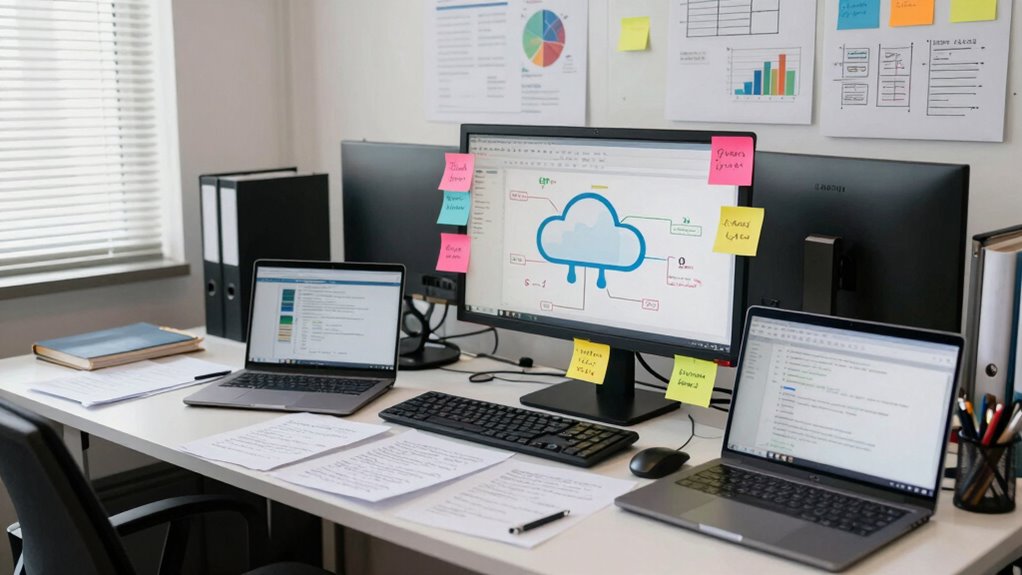
When planning for cloud adoption, teams often overlook critical Total Cost of Ownership (TCO) inputs that can lead to unexpected expenses down the line. While initial cloud costs—like compute instances, storage, and bandwidth—are easy to estimate, many forget to account for ongoing expenses that can significantly inflate the total cost. For example, operational costs such as staff training, management tools, and system integration often get sidelined during early planning stages. Without a clear view of these hidden costs, you might find your cloud budget stretched thin long after the migration begins. Additionally, cost management strategies are essential to maintaining control over your ongoing expenditures and avoiding budget overruns. Recognizing the importance of long-term sustainability in cloud planning can help organizations better align their costs with their overall goals and environmental commitments. Incorporating comprehensive cost analysis into your planning process can also prevent surprises and ensure a more accurate financial outlook. Paying attention to hidden operational costs can further enhance your understanding of the true total cost, especially considering ongoing maintenance and updates, which are often underestimated during initial planning.
As an affiliate, we earn on qualifying purchases.
Frequently Asked Questions
How Do TCO Inputs Differ Between Public and Private Cloud Environments?
In public cloud environments, you focus on resource allocation efficiency and scalability, often underestimating security considerations, which can vary widely. Private clouds demand detailed resource planning tailored to specific needs, with heightened security considerations due to sensitive data. You need to account for different costs associated with security features, compliance, and dedicated resources, ensuring both resource allocation and security considerations are accurately incorporated into your TCO calculations for each environment.
What Role Does Vendor Lock-In Impact TCO Calculations?
They say, “Don’t put all your eggs in one basket,” and vendor lock-in exemplifies that. Vendor dependency and contract constraints can inflate TCO calculations by limiting flexibility, increasing switching costs, and locking you into unfavorable terms. This impacts long-term savings and strategic agility. You need to carefully evaluate vendor lock-in’s potential costs, understanding that dependency can turn a promising cloud solution into a costly, restrictive commitment.
How Can Teams Accurately Forecast Future Scaling Costs?
You can accurately forecast future scaling costs by leveraging predictive analytics to analyze historical data and identify growth patterns. Incorporate cost benchmarking to compare your projected expenses against industry standards, ensuring realistic estimates. Regularly update your models with real-time data to refine predictions and adapt to changing demand. This proactive approach helps you anticipate expenses, optimize resource allocation, and make informed decisions during cloud planning.
What Hidden Operational Costs Should Be Included in TCO?
While it’s wise to take into account obvious costs, don’t overlook hidden expenses and unforeseen charges that can quietly escalate your budget. These include ongoing maintenance, staff training, security compliance, and potential vendor lock-ins. Accounting for these operational costs ensures your total cost of ownership remains accurate, avoiding surprises down the line. Being proactive about capturing these hidden expenses helps you make smarter, more sustainable cloud investment decisions.
How Often Should TCO Models Be Updated During Cloud Migration?
You should update your TCO models regularly throughout your cloud migration, ideally every few months or after significant project milestones. This guarantees your initial assumptions remain accurate and reflect real-world changes. Consistent updates improve cost transparency, helping you identify unexpected operational expenses early. Regular revisions allow you to adjust your strategies proactively, ensuring your TCO stays aligned with actual costs and supports informed decision-making during your migration journey.
cloud infrastructure management software
As an affiliate, we earn on qualifying purchases.
As an affiliate, we earn on qualifying purchases.
Conclusion
Don’t let overlooked TCO inputs be the shadows lurking in your cloud journey. By shining a light on hidden costs like training and maintenance, you’ll turn fog into clarity and avoid surprises that can derail your plans. Think of your cloud strategy as a well-tuned orchestra—every instrument, including those often forgotten, must play its part. When you account for all the notes, your cloud symphony will be harmonious, not a dissonant cacophony.
As an affiliate, we earn on qualifying purchases.
cloud scalability prediction software
As an affiliate, we earn on qualifying purchases.
As an affiliate, we earn on qualifying purchases.
Fall Picks
fall essentials
As an affiliate, we earn on qualifying purchases.