📊 Full opportunity report: Key Considerations For Scheduling Data Center Hardware Upgrades on IdeaNavigator AI — validation score, market gap, and execution plan.

Get business pricing on networking and server gear
- Business-only prices and quantity discounts
- Tax-exempt purchasing
- Multiple users, one account, clear invoices
TL;DR
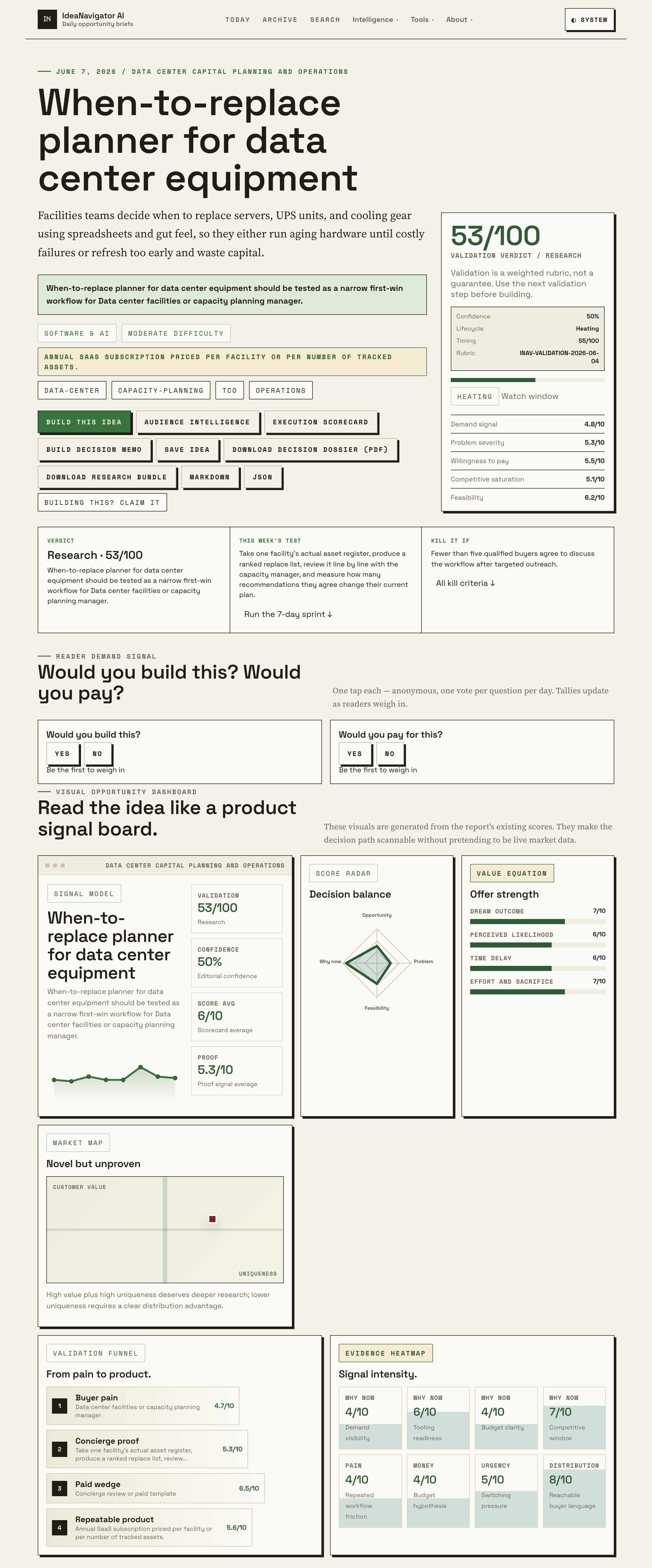
Data center managers are developing new planning tools to optimize hardware replacement timing. A recent project tests a software-based approach to improve decision-making, addressing rising energy costs and aging infrastructure.
Data center facilities teams are increasingly adopting software-driven tools to determine when to replace servers, UPS units, and cooling systems, moving away from traditional spreadsheet-based decisions. This shift responds to rising energy costs and hardware inefficiencies, making replacement timing more critical and complex. The new approach aims to provide objective, data-driven recommendations, potentially transforming capital planning processes.
The initiative involves developing a minimum viable product (MVP) that ingests an asset list with details such as age, power consumption, and maintenance costs. It then ranks each asset based on a ‘replace-now versus keep’ score, considering factors like rising energy expenses and failure risks. The goal is to produce a prioritized list of hardware replacements that facilities managers can review and validate.
This approach has been tested by applying it to a single data center’s asset register. The capacity manager reviews the software-generated recommendations line by line, comparing them with current plans. Success is measured by the level of agreement and whether the tool prompts adjustments to existing strategies.
The SaaS solution is priced per facility or per number of tracked assets, targeting firms involved in data center capital planning and operations. Experts suggest that this method could reduce unnecessary early replacements and prevent costly hardware failures, optimizing capital expenditure and operational efficiency.
Why Optimized Replacement Planning Matters Now
As energy costs rise and hardware becomes more efficient, the decision of when to replace aging data center equipment has become more economically significant. Traditional methods relying on spreadsheets and gut instinct often lead to premature replacements or costly failures. Implementing data-driven planning tools can help facilities managers make more accurate decisions, reducing operational costs and extending equipment lifespan. This shift could also improve overall data center reliability and sustainability, which are critical concerns for the industry amid increasing energy and environmental pressures.
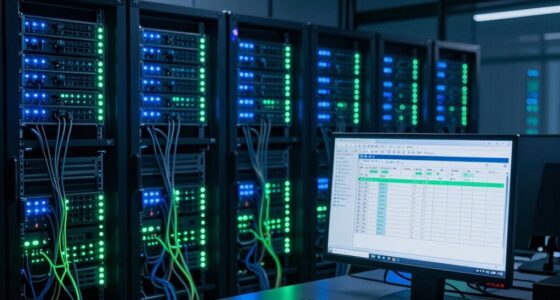
data center server replacement hardware
As an affiliate, we earn on qualifying purchases.
As an affiliate, we earn on qualifying purchases.
Recent Trends in Data Center Hardware Management
Historically, data center hardware replacement decisions have depended on manual assessments, often based on age, appearance, or experience. However, rising energy costs and the availability of more efficient hardware have complicated these choices. Over the past few years, the industry has seen a push toward automation and analytics to enhance decision-making. The development of a software-based replace planner aligns with broader trends toward digital transformation in data center operations, aiming to improve accuracy and cost-effectiveness.
Previous efforts focused on lifecycle management and predictive maintenance, but a comprehensive replacement planning tool that considers multiple factors simultaneously is a newer development. Early testing indicates promise, but wider validation remains ongoing.
“Moving to data-driven replacement planning can significantly reduce unnecessary hardware refreshes and prevent failures, saving costs and improving efficiency.”
— an anonymous researcher
As an affiliate, we earn on qualifying purchases.
Uncertainties in Adoption and Effectiveness
It remains unclear how widely this replacement planning tool will be adopted across different types of data centers, especially smaller or less automated facilities. The effectiveness of the MVP in diverse operational environments and its ability to accurately predict optimal replacement timing are still under evaluation. Additionally, the long-term impact on hardware lifecycle and total cost of ownership has yet to be established through broader testing.
As an affiliate, we earn on qualifying purchases.
Next Steps in Validation and Deployment
Further validation will involve applying the software to multiple facilities to assess consistency and accuracy of recommendations. Data center operators are expected to compare the tool’s suggestions with their existing plans over several cycles. Developers will refine algorithms based on feedback, and vendors may introduce enhanced features. Widespread adoption hinges on demonstrating clear cost savings and operational improvements in real-world settings.
data center hardware monitoring tools
As an affiliate, we earn on qualifying purchases.
As an affiliate, we earn on qualifying purchases.
Key Questions
How does the replacement planner decide when to suggest hardware replacement?
The planner considers factors such as the asset’s age, power consumption, maintenance costs, rising failure risks, and efficiency gains from new hardware to generate a ranked list of replacement priorities.
Can this tool be integrated with existing data center management systems?
Yes, the MVP is designed to ingest data from existing asset registers and can be integrated into broader facilities management platforms, depending on compatibility and customization.
Will this approach eliminate the need for manual decision-making?
Not entirely. The tool aims to provide data-driven recommendations, but human oversight remains essential to interpret results and consider operational context.
What are the main benefits of using this replacement planning tool?
Key benefits include reducing premature hardware replacements, preventing costly failures, optimizing capital expenditure, and improving overall data center efficiency.
When will the software be available for general use?
Wider deployment is expected after further validation and refinement, likely within the next 12 to 18 months, depending on industry feedback and development progress.
Source: IdeaNavigator AI
Halloween Picks
halloween
As an affiliate, we earn on qualifying purchases.