

A healthy cloud roadmap after migration focuses on optimizing infrastructure for security, scalability, and efficiency. You should regularly monitor performance, utilize serverless components to reduce overhead, and update access controls to follow best security practices. Automate routine tasks like backups and patching, and incorporate continuous security checks and threat detection. Keep your team educated on emerging trends and adapt your strategy as new technologies evolve. Staying proactive guarantees your cloud environment remains resilient; explore further to learn more.

Get business pricing on networking and server gear
- Business-only prices and quantity discounts
- Tax-exempt purchasing
- Multiple users, one account, clear invoices
Key Takeaways
- Regularly review and optimize infrastructure for security, scalability, and cost-efficiency using serverless components where appropriate.
- Continuously update security measures, access controls, and conduct vulnerability assessments to address evolving threats.
- Automate routine tasks like backups, patching, and scaling to improve reliability and reduce operational overhead.
- Monitor key performance metrics through dashboards and alerts to proactively resolve issues and ensure compliance.
- Foster ongoing team education and adapt the roadmap to incorporate new technologies and lessons learned for continuous improvement.
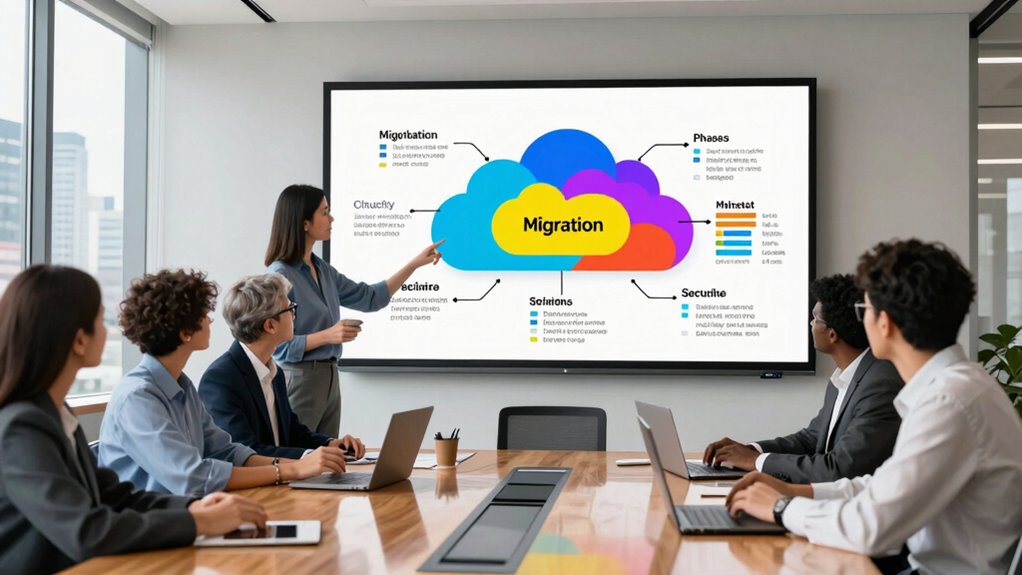
Starting a cloud migration can seem intimidating, but with a clear roadmap, you can navigate the process smoothly. Once you’ve moved your workloads to the cloud, maintaining a healthy cloud environment becomes the next priority. A well-structured cloud roadmap post-migration ensures your infrastructure remains efficient, secure, and scalable. You’ll want to focus on optimizing your architecture, especially by leveraging serverless architecture where appropriate. This approach reduces operational overhead, allows you to pay only for what you use, and offers seamless scalability. As you adopt serverless components, regularly monitor performance metrics to ensure resources are allocated effectively, preventing bottlenecks and unnecessary expenses.
Equally important is implementing robust cloud security strategies. Post-migration, your security posture must evolve to account for new vulnerabilities and compliance requirements. Continuously review and update access controls, enforce least privilege principles, and utilize identity and access management (IAM) tools to restrict unauthorized access. Incorporate encryption both at rest and in transit, and consider deploying security information and event management (SIEM) systems to gain real-time insights into potential threats. Regular vulnerability assessments and penetration testing help identify weaknesses before malicious actors do, while automated security checks can streamline compliance efforts. Additionally, understanding cloud security best practices is essential to build a resilient defense against evolving threats.
Your roadmap should also prioritize automation to reduce manual intervention and minimize errors. Automate routine tasks like backups, patching, and scaling operations. This not only increases reliability but also frees your team to focus on strategic initiatives. Cloud-native tools and services simplify these processes, allowing you to respond swiftly to changing demands and maintain high availability. Incorporating automated security checks further enhances your security posture by ensuring continuous compliance and threat detection. Moreover, adopting a proactive monitoring approach enables you to identify issues early and respond swiftly before they impact users. Establishing a cloud security framework can help systematically address security challenges and ensure consistency across your environment.
Monitoring and analytics play a crucial role in sustaining a healthy cloud environment. Set up dashboards and alerts to track key performance indicators (KPIs), such as latency, error rates, and resource utilization. These insights enable proactive adjustments, preventing issues before they impact users. Regular audits of your cloud environment help ensure compliance with industry standards and internal policies, fostering trust and accountability. Additionally, adopting a cloud health monitoring approach helps you proactively identify and address potential issues before they escalate.
Finally, foster a culture of continuous improvement. Cloud environments are dynamic, and your roadmap should be flexible enough to incorporate new technologies, best practices, and lessons learned. Educate your team on emerging trends like serverless architecture and evolving security strategies so they can adapt quickly. By maintaining a proactive, strategic approach, you’ll ensure that your cloud environment remains resilient, secure, and aligned with your business goals long after migration is complete.
As an affiliate, we earn on qualifying purchases.
Frequently Asked Questions
How Do You Measure Cloud Migration Success?
You measure cloud migration success by monitoring cloud performance and guaranteeing cost optimization. You’ll track key metrics like uptime, latency, and system responsiveness to ensure the cloud runs smoothly. Additionally, you evaluate whether costs align with your budget and goals, adjusting resources as needed. If your cloud environment improves efficiency, reduces expenses, and supports your business growth, then your migration is successful.
What Are Common Post-Migration Challenges?
Post-migration, you often face challenges like balancing cloud optimization and cost management. You might struggle with identifying underutilized resources or controlling unexpected expenses. Ensuring performance stability and security also becomes a priority. You need to continuously monitor your cloud environment, optimize resources, and implement cost-effective strategies. Staying proactive helps you address these issues early, maintaining a healthy cloud infrastructure that supports your ongoing business needs effectively.
How Often Should Cloud Infrastructure Be Reviewed?
Think of your cloud as a garden needing constant tending. You should review your cloud infrastructure at least quarterly, guaranteeing cloud cost management stays efficient and vendor performance aligns with expectations. Regular reviews help catch inefficiencies early, adapt to evolving needs, and optimize resources. By staying proactive, you keep your cloud environment healthy, cost-effective, and responsive to any changes, much like tending a garden to ensure it flourishes.
What Training Is Needed for Staff Post-Migration?
You should prioritize employee training and skill development immediately after migration to guarantee your team adapts smoothly. Focus on technical skills like cloud management, security protocols, and new tools, while also emphasizing best practices for cloud efficiency. Providing ongoing learning opportunities helps staff stay current with evolving cloud technologies. Regular workshops, certifications, and hands-on training sessions are essential to build confidence and maintain ideal cloud performance.
How Do You Ensure Ongoing Security in the Cloud?
Think of cloud security as a fortress constantly under watch. To guarantee ongoing security, you should implement robust cloud security measures and conduct continuous monitoring. Regularly update security protocols, patch vulnerabilities, and employ automated tools to detect threats early. Staying proactive and vigilant helps you defend your cloud environment from evolving risks, making sure your data remains safe and your operations stay resilient in the face of potential threats.
serverless architecture services
As an affiliate, we earn on qualifying purchases.
As an affiliate, we earn on qualifying purchases.
Conclusion
Now that you’ve navigated your cloud migration journey, remember that a healthy cloud roadmap isn’t a destination but a continuous voyage. Like a gardener tending to a thriving garden, you must nurture your cloud environment with regular updates, security checks, and optimization. Embrace this ongoing process, for in the world of cloud computing, growth is endless—you’re not just reaching a goal, you’re cultivating a future where innovation blossoms at every turn.
cloud automation backup solutions
As an affiliate, we earn on qualifying purchases.
As an affiliate, we earn on qualifying purchases.
identity and access management (IAM) tools
As an affiliate, we earn on qualifying purchases.
As an affiliate, we earn on qualifying purchases.
Fall Picks
fall essentials
As an affiliate, we earn on qualifying purchases.




![Rails World 2026 Opening Keynote [Video]](https://eucloudservers.com/wp-content/uploads/2026/09/rails-world-2026-opening-keynote-video-featured-260x140.jpg)