
Cloud infrastructure management tools are only as good as the people who wield them, and the fastest way to get fluent with Terraform, CloudFormation, Kubernetes, and multi-cloud automation is a well-structured book written by practitioners. My top overall pick is Infrastructure as Code, Patterns and Practices, because it teaches the design thinking behind tool choices rather than one vendor’s syntax. Two standouts deserve early mention: Terraform Made Easy for Google Cloud teams who want a focused, practical path, and Implementing GitOps with Kubernetes for anyone moving toward automated, declarative operations on AWS or Azure. The core tradeoff in this category is between vendor-specific depth and tool-agnostic principles — the first gets you productive quickly, the second keeps your skills relevant when platforms change. There is also a real cost-of-entry difference: beginner guides move slowly and gently, while practitioner references assume you already deploy software for a living. Read on for the full ranked breakdown and guidance on which book fits your situation.

Get business pricing on networking and server gear
- Business-only prices and quantity discounts
- Tax-exempt purchasing
- Multiple users, one account, clear invoices
Key Takeaways
- Books that teach infrastructure as code principles beat vendor-specific tutorials for long-term value — my top three picks all explain why patterns work, not just how to type the commands.
- Terraform dominates this category: five of the fourteen books center on it or the HashiCorp ecosystem, reflecting its status as the default multi-cloud provisioning language in 2026.
- Beginner titles are the weakest segment overall — most gloss over CI/CD and state management, so newcomers should plan to buy a second, intermediate book within months.
- The rarest and most valuable coverage in this lineup is GitOps with Kubernetes and self-optimising distributed systems — topics almost no mainstream title addresses well.
- CloudFormation and OpenTofu guides make sense only for committed users of those specific stacks; everyone else gets better mileage from general IaC pattern books.
- Several titles overlap heavily in Terraform content — this comparison reveals which two or three actually earn shelf space versus which are redundant.


| cloud infrastructure management tool | Format | Topic Focus | Audience |
|---|---|---|---|
| Infrastructure as Code | Print / eBook (Manning) | — | Developers and DevOps engineers |
| Modern IT Infrastructure and O | Print / eBook | — | IT professionals, managers, students |
| Mastering Infrastructure as Co | Print / eBook | — | — |
| Managing Distributed Cloud App | Print / eBook | — | Architects, researchers, senior engineers |
| Cloud Computing and Automation | Print / eBook | — | Newcomers to cloud and DevOps |
| Infrastructure as Code with Op | Kindle / Paperback | Infrastructure as Code | — |
| Cloud Migration PM Bible: The | Kindle / Paperback | Cloud migration project management | Project managers, IT professionals |
| Infrastructure as Code: Dynami | Paperback / Kindle | Infrastructure as Code principles | Intermediate to advanced |
| HashiCorp: The Complete Guide | Kindle / Paperback | Multi-cloud infrastructure automation | — |
| Infrastructure as Code: Managi | Paperback / Kindle | Infrastructure as Code, server management | Intermediate engineers and sysadmins |
| Practice of Cloud System Admin | Print / eBook | DevOps and SRE for web services | — |
| Infrastructure Automation with | Print / eBook | Infrastructure automation and orchestration | — |
| Implementing GitOps with Kuber | Print / eBook | GitOps workflow implementation | — |
| Terraform Made Easy: Provision | Print / eBook | Provisioning, managing, automating cloud infrastructure | — |
More Details on Our Top Picks
Infrastructure as Code, Patterns and Practices: With Examples in Python and Terraform
This pick earns the top spot because it treats infrastructure as code as an engineering discipline rather than a tool tutorial. Where Mastering Infrastructure as Code with AWS CloudFormation teaches you one vendor’s syntax, this book focuses on the patterns and practices that survive tool churn — reusable module design, testing strategies, and maintainable pipelines. Readers working in mixed environments will get more mileage here than from single-platform guides like Infrastructure Automation with Terraform, because the Python-plus-Terraform pairing translates cleanly to OpenTofu and other ecosystems. The tradeoff is that it assumes you already know the basics; if you have never written a line of automation code, the Cloud Computing and Automation for Beginners guide is a friendlier on-ramp. For teams standardizing IaC practices, though, this is the reference that keeps paying off.
Pros:- Teaches transferable design patterns rather than single-tool syntax
- Practical examples in both Python and Terraform cover scripting and declarative approaches
- Focused on maintainability and testing, which most IaC books ignore
- Directly applicable to OpenTofu and other Terraform-compatible tools
Cons:- Assumes prior familiarity with cloud concepts and scripting
- Sparse pre-purchase metadata — few reviews to gauge fit before buying
Best for: DevOps engineers and developers who already script basic automation and want battle-tested architectural patterns for team-scale infrastructure
Not ideal for: Complete newcomers to cloud automation — the pattern-heavy approach skips the foundational explanations beginners need first
- Format:Print / eBook (Manning)
- Primary tools:Python and Terraform
- Focus:IaC design patterns and practices
- Experience level:Intermediate
- Cloud coverage:Tool-agnostic, multi-cloud applicable
- Audience:Developers and DevOps engineers
- Includes code examples:Yes
Our verdict“The strongest choice for practitioners who want their infrastructure code to be as well-engineered as their applications.”
Modern IT Infrastructure and Operations: Systems, Cloud, Service Management, and Resilience
Most entries in this roundup drill into a specific tool; this one zooms out to the whole operational picture — systems, service management, and resilience alongside cloud. That breadth makes it the right read for infrastructure managers and architects who need to reason about uptime, process, and vendor strategy rather than write templates. Compared with Managing Distributed Cloud Applications and Infrastructure, which also takes a strategic angle, this book is broader and less academic, covering service management topics the self-optimising text skips entirely. The cost of that scope is depth: hands-on engineers who want working code will find Infrastructure as Code, Patterns and Practices far more actionable. Read this to build your mental model of modern operations, then pick a tool-specific book from this list to execute.
Pros:- Broadest coverage in the roundup, spanning systems, cloud, and service management
- Strong on resilience and operations strategy, not just provisioning
- Accessible to both working professionals and students
- Good foundation before committing to a specific toolchain
Cons:- Lacks detailed technical examples and hands-on exercises
- Too general for readers who already know which platform they manage
Best for: IT managers, operations leads, and solution architects who need a strategic overview of cloud, service management, and resilience
Not ideal for: Hands-on engineers seeking templates or runnable examples — this is conceptual, not a lab manual
- Format:Print / eBook
- Primary focus:IT infrastructure and operations strategy
- Topics covered:Systems, cloud computing, service management, resilience
- Experience level:Beginner to intermediate
- Hands-on labs:No
- Audience:IT professionals, managers, students
- Vendor specificity:Vendor-neutral
Our verdict“A wide-angle lens for people who direct infrastructure strategy rather than those who build it line by line.”
Mastering Infrastructure as Code with AWS CloudFormation: A Comprehensive Guide to AWS Cloud Automation and Orchestration
If your organization has settled on AWS, a CloudFormation-specific guide beats generalist books by a wide margin, because it can go deep on native integrations — stacks, change sets, StackSets, and drift detection — that multi-cloud books only mention in passing. Infrastructure Automation with Terraform covers AWS too, but Terraform’s abstraction layer hides exactly the AWS-native behaviors this book explains. Compared with the beginner guide in this list, it moves faster and expects readers to absorb dense, reference-style material, which is a feature for working engineers and a hurdle for newcomers. The obvious limitation is lock-in: every page you invest here pays off only as long as you stay on AWS. Multi-cloud teams should choose Infrastructure as Code, Patterns and Practices instead.
Pros:- Deep, vendor-native coverage of CloudFormation automation and orchestration
- Includes AWS best practices that generalist Terraform books skip
- Scales from foundational templates to advanced orchestration techniques
- Useful as a desk reference for day-to-day AWS work
Cons:- Tightly coupled to AWS — little transferable value elsewhere
- Dense presentation can overwhelm readers new to infrastructure automation
Best for: Engineers at AWS-centric organizations who need to automate, orchestrate, and govern cloud resources with native tooling
Not ideal for: Multi-cloud or Azure/GCP shops — the CloudFormation focus makes most content irrelevant outside AWS
- Format:Print / eBook
- Primary tool:AWS CloudFormation
- Cloud platform:Amazon Web Services only
- Focus:Cloud automation and orchestration
- Experience level:Beginner to advanced
- Includes practical techniques:Yes
- Best fit:AWS-committed engineering teams
Our verdict“The right specialization for all-in AWS teams, and the wrong one for everyone else.”
Managing Distributed Cloud Applications and Infrastructure: A Self-Optimising Approach
This is the most intellectually demanding entry in the lineup, and that is precisely its value. Rather than teaching a tool, it explores self-optimising techniques for distributed systems — the ideas behind autonomous scaling, feedback-driven management, and adaptive infrastructure. Where Modern IT Infrastructure and Operations gives managers a broad practical survey, this book goes narrow and deep for researchers, platform architects, and senior engineers designing systems that manage themselves. The tradeoff is real: there are no step-by-step labs, and a reader who wants to provision a VPC by Friday will be better served by Mastering Infrastructure as Code with AWS CloudFormation or the Terraform guides in this roundup. Treat it as the theory layer beneath your tooling decisions rather than a substitute for them.
Pros:- Rare, in-depth treatment of self-optimising infrastructure management
- Connects distributed systems theory to cloud operations practice
- Frames digital business context around enabling technologies
- Strong complement to tool-focused books in this roundup
Cons:- No practical examples, labs, or case studies
- Steep technical learning curve that excludes most beginners
Best for: Platform architects, researchers, and senior engineers exploring autonomous and self-optimising approaches to distributed cloud systems
Not ideal for: Practitioners who need immediate, hands-on solutions — there are no runnable examples or case studies to follow
- Format:Print / eBook
- Primary focus:Self-optimising distributed cloud management
- Approach:Theoretical and architectural
- Experience level:Advanced
- Hands-on labs:No
- Vendor specificity:Vendor-neutral
- Audience:Architects, researchers, senior engineers
Our verdict“A theory-first text for people designing the next generation of cloud management, not for those configuring today’s stacks.”
Cloud Computing and Automation for Beginners: A Step-by-Step Guide to Modern Cloud Platforms, Infrastructure as Code, and CI/CD Workflows
Every roundup needs an accessible entry point, and this is it. The book walks newcomers through cloud platforms, infrastructure as code, and CI/CD workflows with step-by-step pacing that no other pick here attempts. Where Infrastructure as Code, Patterns and Practices starts from the assumption you can already script, this guide builds vocabulary and confidence from zero, making it a sensible first purchase before graduating to the heavier titles. The price of that accessibility is ceiling: it surveys many topics without committing to any platform deeply, so an engineer who needs production-grade Terraform or CloudFormation skills will outgrow it within months. Think of it as onboarding material — for yourself or for junior teammates — rather than a long-term reference like the AWS or Terraform-specific guides in this list.
Pros:- Genuinely beginner-friendly pacing with step-by-step structure
- Covers cloud platforms, IaC, and CI/CD in one accessible volume
- Builds shared vocabulary useful before tackling advanced books
- Good onboarding resource for junior team members
Cons:- Lacks the technical depth needed for production work
- No specific platform focus, so skills stay conceptual rather than tool-ready
Best for: Career-changers, students, and junior IT staff who need a gentle, structured introduction to cloud and automation concepts
Not ideal for: Working DevOps engineers — the content is too foundational and too shallow to justify the shelf space
- Format:Print / eBook
- Topics covered:Cloud platforms, IaC, CI/CD workflows
- Structure:Step-by-step tutorial style
- Experience level:Beginner
- Platform focus:General, no single vendor
- Hands-on exercises:Yes, guided
- Audience:Newcomers to cloud and DevOps
Our verdict“The cheapest way to find out whether cloud automation is for you — before investing in the specialist books above it.”
Infrastructure as Code with OpenTofu: A Practical Guide to Managing Infrastructure Resources
Most infrastructure-as-code books assume Terraform, but this one goes all-in on OpenTofu, the open-source fork that emerged after HashiCorp’s license change. That focus is the entire reason to pick it: teams that have moved (or plan to move) off Terraform need guidance written for their actual toolchain, not a Terraform book with a footnote. Compared with Infrastructure Automation with Terraform elsewhere in this roundup, this guide trades ecosystem breadth for tool-specific practicality, covering compute, storage, and networking with migration-aware best practices. The tradeoff is real, though — the OpenTofu ecosystem is younger, community resources are thinner, and a book can’t fully compensate for that. Still, for teams committed to a fully open-source stack, this stands out as one of the few dedicated resources.
Pros:- Dedicated coverage of OpenTofu, a rarity among infrastructure-as-code books
- Practical, implementation-focused approach across compute, storage, and networking
- Includes best practices for infrastructure automation workflows
- Directly relevant to teams avoiding vendor-controlled licensing
Cons:- Smaller community ecosystem means fewer outside resources to supplement the book
- As a newer tool, OpenTofu itself evolves quickly and may outpace print editions
Best for: DevOps engineers and platform teams who have migrated from Terraform to OpenTofu and want a dedicated, practical reference for the open-source workflow
Not ideal for: Teams still happily on Terraform or those evaluating tools for the first time — a mainstream Terraform guide will serve them better
- Format:Kindle / Paperback
- Primary Tool:OpenTofu
- Topic Focus:Infrastructure as Code
- Coverage Areas:Compute, storage, networking
- Skill Level:Intermediate
- Includes Best Practices:Yes
Our verdict“Buy this only if OpenTofu is your tool of choice — for everyone else, a Terraform-based alternative in this roundup offers broader applicability.”
Cloud Migration PM Bible: The Complete Framework for Running Successful Infrastructure, Application, and Cloud Migrations
This is the odd one out in a lineup dominated by engineer-focused coding books — and that’s its strength. Rather than teaching you to write HCL or templates, it delivers a project management framework for migrations: planning, stakeholder alignment, execution, and risk control. Where Infrastructure as Code: Managing Servers in the Cloud handles the technical ‘how’, this book handles the organizational ‘how do we actually get this done without blowing the budget’. That makes it a rare fit for PMs coordinating cloud moves rather than the engineers underneath them. The flip side: advanced practitioners will find the technical depth shallow, and hands-on engineers should look elsewhere in this roundup. It earns its place by covering a gap most cloud books ignore — the migration process itself, not the tooling.
Pros:- Covers migration project management, a topic most infrastructure books skip
- Framework-based structure makes it easy to apply to real projects
- Accessible to non-engineers, including PMs and business stakeholders
- Spans infrastructure, application, and cloud migration scenarios
Cons:- Light on technical specifics — no tool walkthroughs or code
- May feel too general for experienced migration architects
Best for: Project managers and IT leads responsible for planning and executing cloud, infrastructure, or application migrations across teams
Not ideal for: Hands-on engineers wanting code examples or deep technical detail — the content stays at the framework and process level
- Format:Kindle / Paperback
- Topic Focus:Cloud migration project management
- Audience:Project managers, IT professionals
- Approach:Framework and best practices
- Coverage:Infrastructure, application, and cloud migrations
- Skill Level:Beginner to intermediate (management)
Our verdict“The right pick if you run migrations rather than build them; engineers should pair it with a technical title from this list instead of relying on it alone.”
Infrastructure as Code: Dynamic Systems for the Cloud Age
This is the thinking person’s infrastructure book. Rather than walking through a specific tool, it builds a mental model of dynamic, continuously changing cloud systems and how code should manage them — principles that outlast any single platform. Compared with the Cloud Migration PM Bible, which is process-oriented, this one targets architects and senior engineers who need to design scalable, self-adjusting systems rather than follow a checklist. Its strength is durability: the concepts apply whether you use Terraform, OpenTofu, or whatever comes next. The cost is accessibility — beginners will find the material abstract and dense, and it won’t teach you to provision your first server. For readers who already know a tool and want to understand why systems are designed the way they are, this pick makes more sense than any tutorial-style alternative.
Pros:- Tool-agnostic principles that stay relevant as platforms change
- Strong focus on scalable and dynamic system design
- Written for serious practitioners, not casual readers
- Complements tool-specific books by explaining the underlying ‘why’
Cons:- Dense and abstract — not a hands-on learning path
- Assumes existing familiarity with cloud infrastructure concepts
Best for: Architects and senior engineers who understand the basics of infrastructure as code and want deeper principles for designing scalable, dynamic cloud systems
Not ideal for: Beginners looking for step-by-step tutorials — the conceptual approach assumes prior cloud and coding knowledge
- Format:Paperback / Kindle
- Topic Focus:Infrastructure as Code principles
- Approach:Conceptual and architectural
- Tool Specificity:Tool-agnostic
- Key Themes:Dynamic systems, automation, scalability
- Audience:Intermediate to advanced
- Skill Level:Advanced
Our verdict“Choose this to level up your design thinking, not to learn a tool — pair it with a practical guide like the OpenTofu book for the full picture.”
HashiCorp: The Complete Guide to Infrastructure Automation: Master Terraform, Vault, Consul, and Nomad for Multi-Cloud Provisioning, Secrets Management, and Service Mesh
If your organization runs the entire HashiCorp suite, this is the most efficient path to competence across all of it. Most alternatives cover one tool — the Mastering AWS CloudFormation title elsewhere in this roundup is single-platform by design — but this guide stitches together Terraform, Vault, Consul, and Nomad as one multi-cloud automation stack, including the parts competitors skip: secrets management and service mesh. That breadth is the appeal and the risk. Covering four tools means each gets less depth than a dedicated book would provide, so a Terraform specialist will outgrow the Terraform chapters quickly. For generalists and platform engineers who need working knowledge across the whole ecosystem rather than mastery of one piece, the tradeoff favors this book. Beginners should note the multi-tool scope assumes comfort with cloud fundamentals from page one.
Pros:- Covers four HashiCorp tools in one coherent resource
- Includes secrets management and service mesh, often ignored elsewhere
- Multi-cloud provisioning guidance rather than single-vendor lock-in
- Practical examples connect the tools into real workflows
Cons:- Breadth over depth — each tool gets less coverage than a dedicated book
- Licensing changes in the HashiCorp ecosystem may date some guidance
Best for: Platform engineers and DevOps generalists working in organizations standardized on the HashiCorp stack across multiple clouds
Not ideal for: Beginners still learning cloud basics, or specialists who need deep coverage of just one tool like Terraform alone
- Format:Kindle / Paperback
- Tools Covered:Terraform, Vault, Consul, Nomad
- Topic Focus:Multi-cloud infrastructure automation
- Special Topics:Provisioning, secrets management, service mesh
- Includes Examples:Yes
- Skill Level:Intermediate to advanced
Our verdict“The strongest choice for teams running the full HashiCorp suite; skip it if you only need one tool mastered deeply.”
Infrastructure as Code: Managing Servers in the Cloud
This O’Reilly title is the steady, practitioner-oriented backbone of an infrastructure-as-code library. It sits between the abstract Dynamic Systems for the Cloud Age and narrowly focused tool guides by teaching server management principles with practical grounding — provisioning, automation, and the habits that keep cloud environments manageable as they grow. Compared with the HashiCorp Complete Guide, it trades multi-tool breadth for a more focused, better-established treatment of core practices, which makes it the safer first purchase for engineers building their foundation. The drawback is age: cloud platforms move fast, and some examples won’t reflect current console options or newer services. The principles hold up better than the specifics, but readers wanting cutting-edge coverage of serverless or GitOps should supplement it with a newer title like the Kubernetes GitOps book in this roundup.
Pros:- Well-established, widely referenced treatment of infrastructure as code
- Practical strategies for server provisioning and management
- Balanced between principles and real-world practice
- Readable for intermediate engineers without being tool-obsessed
Cons:- Published before recent cloud developments, so some examples feel dated
- Doesn’t provide deep coverage of any single modern tool
Best for: Engineers and sysadmins building a solid foundational understanding of managing cloud servers with infrastructure-as-code practices
Not ideal for: Readers wanting current coverage of the latest cloud services or a tool-specific tutorial — the material is principle-first and predates newer trends
- Format:Paperback / Kindle
- Topic Focus:Infrastructure as Code, server management
- Approach:Principles with practical strategies
- Tool Specificity:Tool-agnostic with examples
- Coverage Areas:Server provisioning, automation, cloud environments
- Audience:Intermediate engineers and sysadmins
Our verdict“A dependable foundation purchase for practitioners new to infrastructure as code, best paired with a current tool-specific guide to fill gaps.”
Practice of Cloud System Administration, The: DevOps and SRE Practices for Web Services, Volume 2
Most entries in this roundup teach you how to execute a specific tool; this one teaches you how to think about running cloud services at scale. Where Infrastructure Automation with Terraform hands you syntax and workflows, this volume goes after the harder question of what good operations looks like once systems grow beyond a single team. Its DevOps and SRE framing translates directly into fewer incidents and saner on-call rotations for web services. The tradeoff is deliberate: you won’t find step-by-step provisioning recipes here, so readers who need immediate hands-on output will get more from a tool-specific title first. Compared with Modern IT Infrastructure and Operations, this pick is narrower but deeper on reliability practice.
Pros:- Deep coverage of DevOps and SRE practices for web-scale services
- Focuses on operational judgment rather than tool syntax that dates quickly
- Written for practitioners managing real production environments
- Pairs well with tool-specific books like the Terraform guides in this list
Cons:- No step-by-step labs or copyable code examples
- Assumes existing Linux and systems knowledge
Best for: Mid-career sysadmins and SREs who already know the tools and want to improve processes, incident response, and service reliability
Not ideal for: Beginners seeking a first hands-on tutorial — there are no guided provisioning exercises to follow along with
- Format:Print / eBook
- Topic Focus:DevOps and SRE for web services
- Series:The Practice of Cloud System Administration, Volume 2
- Audience Level:Intermediate to advanced
- Coverage:Cloud system administration, scaling, operations
- Hands-On Labs:No — conceptual and practice-oriented
Our verdict“Buy this after you’ve learned a tool like Terraform — it’s the book that turns provisioning skills into production reliability skills.”
Infrastructure Automation with Terraform: Automate and Orchestrate Your Infrastructure Across AWS and Microsoft Azure
This is the most balanced Terraform reference in the roundup for teams that refuse to marry a single provider. Unlike Terraform Made Easy, which is anchored entirely to Google Cloud, this title splits its automation and orchestration guidance across AWS and Microsoft Azure, making it the practical choice for organizations running workloads in both. Compared with Implementing GitOps with Kubernetes, it stays at the infrastructure layer rather than the application delivery layer, so it fits teams whose pain point is provisioning, not deployment pipelines. The tradeoff: the writing is dense, and complete newcomers may struggle before the concepts click. Intermediate users get a durable, provider-agnostic IaC foundation in exchange for that friction.
Pros:- Covers both AWS and Azure with a unified Terraform workflow
- Strong on infrastructure-as-code best practices, not just syntax
- Scales from first modules to multi-cloud orchestration
- Works for both newcomers with some background and experienced engineers
Cons:- Content can feel dense for readers starting from zero
- Excludes Google Cloud, so GCP-first shops need a different title
Best for: DevOps engineers and platform teams managing infrastructure across both AWS and Azure who want one Terraform reference instead of two
Not ideal for: Absolute beginners with no cloud console experience — the density of the early chapters can stall momentum
- Format:Print / eBook
- Tool Covered:HashiCorp Terraform
- Cloud Providers:AWS and Microsoft Azure
- Topic Focus:Infrastructure automation and orchestration
- Audience Level:Beginner-friendly to intermediate
- Includes:Infrastructure-as-code best practices
Our verdict“The pragmatic pick if your infrastructure lives in AWS and Azure and you want one Terraform book to cover both.”
Implementing GitOps with Kubernetes: Automate, Manage, Scale, and Secure Infrastructure and Cloud-Native Applications on AWS and Azure
While Infrastructure Automation with Terraform answers “how do I provision servers,” this book answers the next question: “how do I ship and govern applications once they exist?” Its GitOps approach — using Git as the source of truth for Kubernetes state — is what separates modern cloud-native teams from those hand-applying manifests at 2 a.m. Coverage of scaling, security, and multi-cloud deployment on AWS and Azure makes it a natural sequel to a Terraform title rather than a competitor. The barrier to entry is real: it assumes working knowledge of Kubernetes, so readers should arrive with cluster fundamentals already solid. If your stack isn’t containerized, this depth buys you nothing.
Pros:- Practical GitOps workflows using Git as the single source of truth
- Covers automation, scaling, and security in one framework
- Multi-cloud guidance for both AWS and Azure
- Directly applicable to real CI/CD and cluster operations
Cons:- Requires prior Kubernetes and cloud platform knowledge
- Doesn’t teach underlying infrastructure provisioning — pair it with a Terraform book
Best for: Platform engineers and DevOps teams already running Kubernetes who want Git-driven automation, security policy, and scaling practices
Not ideal for: Teams without containerized workloads or Kubernetes experience — the GitOps concepts won’t map to anything they operate
- Format:Print / eBook
- Topic Focus:GitOps workflow implementation
- Platform:Kubernetes
- Cloud Providers:AWS and Azure
- Coverage:Automation, scaling, security, cloud-native apps
- Prerequisites:Kubernetes and cloud fundamentals
Our verdict“The clear choice once clusters are in production and you need disciplined, automated delivery rather than more provisioning tutorials.”
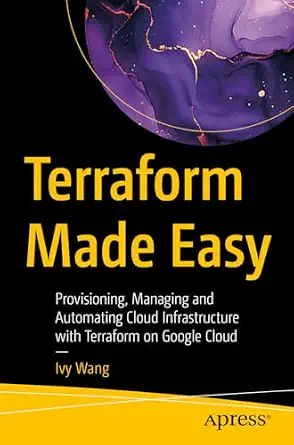
Terraform Made Easy: Provisioning, Managing and Automating Cloud Infrastructure with Terraform on Google Cloud
Most Terraform literature gravitates toward AWS, which leaves GCP shops underserved — and that’s exactly the gap this title fills. Its single-cloud focus on Google Cloud means every example, quota, and service mapping matches what readers actually see in their own console, something the broader Infrastructure Automation with Terraform can’t do while splitting attention between two providers. The framing around provisioning, managing, and automating makes it a reasonable entry point for engineers consolidating GCP resources under IaC. The honest tradeoff: with no customer reviews yet and no detailed spec list, buyers are taking it on faith compared with more established titles in this roundup. AWS or Azure teams should skip it entirely.
Pros:- GCP-specific Terraform guidance that mirrors the real Google Cloud console
- Covers the full provisioning-to-automation lifecycle
- Approachable entry point for infrastructure as code on GCP
- Automation best practices included for efficient resource management
Cons:- No customer reviews or ratings yet to validate quality
- Limited to one cloud provider, reducing long-term reference value
Best for: Engineers and small teams standardized on Google Cloud who want Terraform examples that match their own environment exactly
Not ideal for: AWS, Azure, or multi-cloud teams — the GCP-specific examples won’t transfer without rework
- Format:Print / eBook
- Tool Covered:HashiCorp Terraform
- Cloud Provider:Google Cloud Platform
- Topic Focus:Provisioning, managing, automating cloud infrastructure
- Audience Level:Beginner to intermediate
- Includes:Automation techniques and best practices
- Ratings:None available yet
Our verdict“A sensible bet for Google Cloud-first teams, though its short track record makes it less of a sure thing than the multi-cloud alternatives.”

How We Picked
I evaluated each book against the criteria that actually determine whether a cloud infrastructure title helps you in production: depth versus accessibility, currency of tooling, practical worked examples, and durability of the concepts. A book teaching Terraform 0.12-era syntax with no mention of OpenTofu or modern state backends was marked down, because cloud tooling moves fast and stale examples cost readers real debugging time. Likewise, I weighted books that explain failure modes — drift, state corruption, secrets leakage — higher than those that only walk through happy-path deployments, since those are the situations that define infrastructure management in practice.
The ranking also reflects audience fit. Titles that serve a narrow but underserved reader, such as Google Cloud practitioners or migration project managers, ranked higher within their niche than broader but shallower competitors. Finally, I considered value per page: some 400-page books deliver 100 pages of insight, while shorter guides sometimes pack in more transferable knowledge. Books earning top spots justify their length with material you cannot easily find in free documentation.
| cloud infrastructure management tool | Format |
|---|---|
| Infrastructure as Code | Print / eBook (Manning) |
| Modern IT Infrastructure and O | Print / eBook |
| Mastering Infrastructure as Co | Print / eBook |
| Managing Distributed Cloud App | Print / eBook |
| Cloud Computing and Automation | Print / eBook |
| Infrastructure as Code with Op | Kindle / Paperback |
| Cloud Migration PM Bible: The | Kindle / Paperback |
| Infrastructure as Code: Dynami | Paperback / Kindle |
| HashiCorp: The Complete Guide | Kindle / Paperback |
| Infrastructure as Code: Managi | Paperback / Kindle |
| Practice of Cloud System Admin | Print / eBook |
| Infrastructure Automation with | Print / eBook |
| Implementing GitOps with Kuber | Print / eBook |
| Terraform Made Easy: Provision | Print / eBook |
Factors to Consider When Choosing Cloud Infrastructure Management Tools
Choosing among cloud infrastructure management books comes down to matching a title’s assumptions to your current skill level and your target platform. Before buying any of the fourteen books above, work through the factors below — they explain most of the regret I see readers express after picking the wrong title.Match the Book to Your Platform, Not the Hype
The most common mistake is buying a Terraform book when your employer is committed to CloudFormation, or vice versa, because a reviewer called one superior. Tool alignment matters more than tool quality in this field: a mediocre CloudFormation guide will serve an AWS-native shop better than an excellent Terraform title nobody on the team will adopt. Before purchasing, check which provisioning tool your team already uses, which one your CI/CD pipeline expects, and whether multi-cloud support is a genuine requirement or an aspiration. Multi-cloud books sound appealing but often split their examples thinly across platforms, leaving you with half-length coverage of each. If you work in a single-cloud environment, platform-specific depth usually wins. Only teams genuinely running workloads across AWS, Azure, and GCP get full value from multi-cloud titles like the HashiCorp ecosystem guide.
Principles Books Age Better Than Syntax Books
Cloud provider APIs change quarterly, and provisioning tool syntax evolves with them, so any book organized around command-by-command walkthroughs has a short shelf life. Books focused on patterns — immutable infrastructure, environment separation, state isolation, secrets handling — stay useful for years because the problems they solve are structural. A practical test: flip to the middle of the book. If the pages are dense with terminal output and version numbers, expect the content to decay within a year or two. If the pages discuss tradeoffs, team workflows, and failure scenarios, you are looking at a reference you will revisit across jobs. The strongest libraries combine one principles book with one current syntax reference, and this applies directly to how I ranked the top picks in this roundup.
Watch for the Beginner-Book Trap
Beginner cloud books face a structural problem: the topic genuinely requires prior knowledge of networking, operating systems, and scripting, so authors either assume it and lose novices, or skip it and produce shallow coverage. Many intro-level titles quietly omit state management, IAM, and CI/CD integration — the exact areas where beginners get stuck in real projects. If you are new to cloud infrastructure, accept that one book will not carry you to competence, and budget for a follow-up intermediate title from the start. Check the table of contents for chapters on troubleshooting and deployment pipelines, not just provisioning. A beginner book that acknowledges what it leaves out is more honest and more useful than one promising completeness. Reading reviews from self-identified beginners, rather than experienced engineers praising clarity, gives a better signal here.
Free Documentation Versus Paid Books
Terraform, Kubernetes, and every major cloud provider maintain excellent free documentation, which raises the fair question of what a book must add to justify its price. The answer is curated sequencing, real-world context, and the reasoning behind choices — three things official docs deliberately avoid. Documentation tells you what each command does; a good book tells you which commands matter, in what order, and what breaks when you skip steps. Where a book merely rephrases the docs with screenshots, skip it and read the docs instead. Where a book includes architectures, tradeoff discussions, or war stories from production incidents, it earns its price. Several titles in this roundup fail that test, which is why they rank below peers covering the same tools.
Consider Your Role, Not Just Your Skill Level
A developer adding infrastructure code to a side project needs different material than a platform engineer running shared environments for forty teams, and both need different books than a manager overseeing a cloud migration. Role fit explains more satisfaction variance in this category than any other factor. The migration management title, for instance, contains little code but is invaluable for anyone accountable for budgets, timelines, and stakeholder communication. The SRE practices book serves on-call engineers and operations leads who spend their days keeping services healthy rather than provisioning new ones. Before buying, ask what you will actually do next quarter: write modules, review pull requests, run incident response, or plan a migration. The book that matches that activity is the one worth buying, regardless of rankings.
Secondhand, Editions, and the OpenTofu Question
Several classic infrastructure titles exist in multiple editions, and the differences matter more than in most tech categories because state management and provider ecosystems changed fundamentally between editions. Always confirm you are buying the latest edition, and be wary of third-party sellers shipping older printings at discount. The rise of OpenTofu, the open-source Terraform fork, adds a wrinkle: syntax is largely identical today, so current Terraform books remain useful, but books explicitly covering OpenTofu signal the authors are tracking the community closely. For foundational concepts, secondhand copies of older principles books can be a bargain, since patterns like idempotence and declarative configuration predate any current tool. For anything touching specific providers or CI platforms, insist on recent publication dates. A two-year-old book in this field is roughly equivalent to a six-year-old book in general programming.
Frequently Asked Questions
Should I learn Terraform or OpenTofu in 2026?
Learn Terraform first, because the overwhelming majority of tutorials, modules, and job postings still reference it, and the skills transfer directly to OpenTofu since the tools share syntax and state formats. OpenTofu matters if your organization has licensing or open-source policy concerns around HashiCorp’s license change, or if you want guaranteed community governance over your provisioning toolchain. The practical book-buying implication is that a strong Terraform title like Infrastructure as Code, Patterns and Practices or the multi-cloud Terraform guide serves both tools equally well. Only commit to an OpenTofu-specific book if your team has already standardized on the fork. What you should avoid is delaying learning either tool while deliberating — the concepts, not the binary name, are what make you employable.
Do I need a Kubernetes book if I’m already learning Terraform?
They solve different problems, so the answer depends on where your workloads live. Terraform provisions the infrastructure — networks, clusters, databases — while Kubernetes manages what runs inside those clusters, and the GitOps approach increasingly merges the two into a single declarative workflow. If your organization runs containerized services at any scale, a GitOps-with-Kubernetes book will eventually become necessary, and Implementing GitOps with Kubernetes is the strongest option in this lineup for bridging provisioning and workload management. If you mainly manage cloud resources and VMs, defer Kubernetes until container workloads actually appear on your roadmap. Learning both simultaneously tends to produce shallow knowledge of each. A reasonable sequence is Terraform fluency first, then GitOps once you are comfortable with declarative configuration.
Are vendor-specific books (AWS CloudFormation, Google Cloud) worth it, or should I always go multi-cloud?
Vendor-specific books are worth it precisely when your career or employer is tied to that vendor, because they cover quirks, limitations, and best practices that multi-cloud books must compress or skip entirely. The CloudFormation guide in this roundup, for example, goes deeper on AWS-specific features like StackSets and drift detection than any general Terraform book can afford to. Multi-cloud titles earn their keep only when you genuinely operate across providers or want employer-portable skills — the premium-tier multi-cloud automation guide fits that reader. A common mistake is buying multi-cloud coverage out of vague future-proofing, then finding the examples for your actual platform are too thin to build on. Choose based on where your next two years of work will happen, not on hypothetical flexibility.
I’m a complete beginner — which single book should I start with?
Start with Cloud Computing and Automation for Beginners if you have no cloud background at all, because it builds vocabulary and concepts before touching code, but plan on it being a first step rather than a complete path. Once the basics click, move to Terraform Made Easy or the patterns-and-practices title, depending on whether you prefer hands-on syntax or conceptual grounding. What beginners should not do is start with the SRE practices book or the distributed systems title — both assume production experience that will make them frustrating rather than challenging. Be skeptical of any single book promising to take you from zero to cloud engineer; the realistic path is two books plus a personal project deployed on a free-tier account. The project, more than either book, is what converts reading into skill.
Is the migration management book useful if I’m a hands-on engineer?
It is useful but only at a specific moment: when you are promoted into or hired onto a migration project with timelines, stakeholders, and shared accountability. Hands-on engineers often dismiss management-framework books, then find themselves unprepared when a migration stalls over scope disputes or executive expectations rather than technical problems. The Cloud Migration PM Bible covers the frameworks, communication structures, and risk planning that pure engineering books never address. If your migrations are self-directed weekend lifts of a single application, skip it. If you are coordinating teams, budgets, or vendor handoffs, it becomes one of the few books in this space worth its price. Pair it with a technical IaC title so you can execute what you plan.
Conclusion
After comparing all fourteen titles, the right choice depends less on which book is objectively best and more on what you are trying to accomplish this year. For best overall, Infrastructure as Code, Patterns and Practices earns the top spot because it builds judgment that outlasts any single tool — an uncommon quality in a category full of syntax walkthroughs. For best value, Terraform Made Easy delivers focused, practical Google Cloud coverage at a lower commitment than the sprawling multi-platform alternatives. For best premium pick, the HashiCorp complete guide justifies its heft for engineers whose daily work spans Terraform, Vault, Consul, and Nomad across providers.
For beginners, start with Cloud Computing and Automation for Beginners and accept that a second book will follow within months. For specific needs: AWS shops should reach for the CloudFormation guide, OpenTofu adopters for the OpenTofu practical guide, container-platform teams for Implementing GitOps with Kubernetes, and migration leads for the Cloud Migration PM Bible. Operations engineers will get more from the SRE practices volume than from any provisioning book, while researchers and architects tackling large distributed systems should look at the self-optimising approach title. Whatever you pick, pair one principles book with one current syntax reference — that combination will carry you further than any single title in this list.
Fall Picks
fall essentials
As an affiliate, we earn on qualifying purchases.