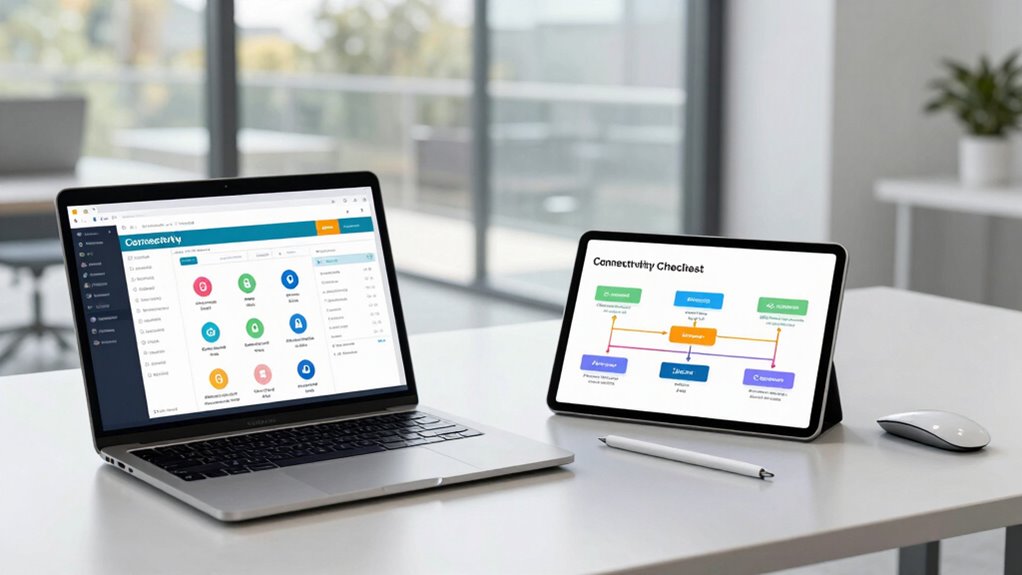

To guarantee a successful hybrid cloud rollout, start by evaluating your existing network infrastructure to identify bottlenecks and plan scalability. Implement high-speed, reliable connections like MPLS or ExpressRoute, and consider deploying edge locations to reduce latency. Monitor performance regularly to catch issues early, and design your architecture with future growth in mind. Following best practices for connectivity and security will boost reliability and efficiency. Keep these strategies in mind, and you’ll be well on your way to a seamless hybrid cloud deployment.

Get business pricing on networking and server gear
- Business-only prices and quantity discounts
- Tax-exempt purchasing
- Multiple users, one account, clear invoices
Key Takeaways
- Assess existing network infrastructure and identify potential bottlenecks before deployment.
- Implement reliable, high-speed dedicated connections like MPLS or ExpressRoute for seamless hybrid connectivity.
- Deploy edge locations strategically to reduce latency and improve application performance.
- Continuously monitor network performance and capacity to proactively address latency issues.
- Follow best practices for hybrid cloud connectivity, ensuring security, scalability, and reliability.

Moving to a hybrid cloud environment can boost your organization’s agility and scalability, but it also introduces complex connectivity challenges that you need to address upfront. One of the most essential issues is managing network latency, which can considerably impact application performance and user experience. High latency causes delays in data transfers, leading to sluggish response times and frustration for users relying on cloud resources. To mitigate this, you should evaluate your network infrastructure, identify potential bottlenecks, and consider deploying edge locations or dedicated connections like MPLS or ExpressRoute to reduce latency. Guaranteeing a reliable, high-speed connection between your on-premises data centers and cloud environments is imperative for seamless operations. Additionally, implementing network optimization techniques can further improve performance and reduce latency issues. Ensuring your network architecture is designed with scalability in mind will help accommodate future growth and evolving application demands. Incorporating performance monitoring tools** can also help detect and address latency issues proactively before they impact end-users. Regularly reviewing your network capacity can help prevent unexpected congestion and maintain optimal performance. Moreover, aligning your network architecture with best practices for hybrid cloud connectivity** can enhance overall reliability and security.
MPLS dedicated connection for hybrid cloud
As an affiliate, we earn on qualifying purchases.
As an affiliate, we earn on qualifying purchases.
Frequently Asked Questions
How Do I Prioritize Connectivity Needs During Hybrid Cloud Deployment?
You should prioritize connectivity needs by first evaluating critical workloads and their bandwidth requirements. Implement network segmentation to isolate sensitive data and optimize traffic flow, ensuring secure and efficient operations. Focus on bandwidth optimization to prevent bottlenecks and enhance performance across hybrid environments. Regularly monitor network performance and adjust priorities based on workload demands, keeping your hybrid cloud deployment resilient, secure, and scalable.
What Security Measures Are Essential for Hybrid Cloud Connectivity?
You need to implement robust security measures like data encryption to protect sensitive information during hybrid cloud connectivity. Additionally, establish strict access control policies to restrict who can access your cloud resources. Use multi-factor authentication and regular audits to monitor activity. These measures guarantee your data stays secure and only authorized users can reach your hybrid cloud environment, reducing risks and maintaining compliance.
How Does Latency Impact Hybrid Cloud Performance?
Imagine you’re in a sci-fi film, but latency isn’t your friendly alien. It directly impacts hybrid cloud performance by causing delays that slow data transfer and applications. To combat this, you focus on network optimization and bandwidth management. These strategies reduce latency, ensuring smooth communication between on-premises and cloud resources. You’ll notice better responsiveness, faster data access, and a more seamless experience, even during peak usage times.
What Tools Facilitate Seamless Hybrid Cloud Network Management?
You can facilitate seamless hybrid cloud network management using tools focused on network automation and cloud orchestration. These tools automate repetitive tasks, optimize resource allocation, and streamline deployment processes, making your network more agile. Cloud orchestration platforms coordinate multiple services and environments, ensuring consistent configurations and improved scalability. Together, they reduce errors, improve performance, and help you maintain control across diverse cloud environments, simplifying complex hybrid cloud management.
How Can I Ensure Compliance Across Hybrid Cloud Connectivity?
You can guarantee compliance across hybrid cloud connectivity by regularly auditing your setups to meet data sovereignty and compliance standards. Studies show that 78% of organizations face penalties for non-compliance, emphasizing the importance of strict adherence. Implement automated compliance monitoring tools and establish clear policies to track data movement and access. This proactive approach keeps your hybrid environment aligned with regulations, reducing risks and maintaining trust with stakeholders.
ExpressRoute high-speed network connection
As an affiliate, we earn on qualifying purchases.
As an affiliate, we earn on qualifying purchases.
Conclusion
As you consider your hybrid cloud journey, remember that smooth connectivity is the gentle rhythm guiding your success. By carefully tending to each checklist item, you’re nurturing a harmonious environment where data flows seamlessly and operations stay aligned. Embrace these thoughtful steps as your trusted compass, and you’ll find that the shift becomes a graceful dance—calm, confident, and poised for growth. With patience and attention, your hybrid cloud will flourish, opening new horizons with ease.
edge locations for cloud latency reduction
As an affiliate, we earn on qualifying purchases.
As an affiliate, we earn on qualifying purchases.
network performance monitoring tools
As an affiliate, we earn on qualifying purchases.
As an affiliate, we earn on qualifying purchases.
Fall Picks
fall essentials
As an affiliate, we earn on qualifying purchases.