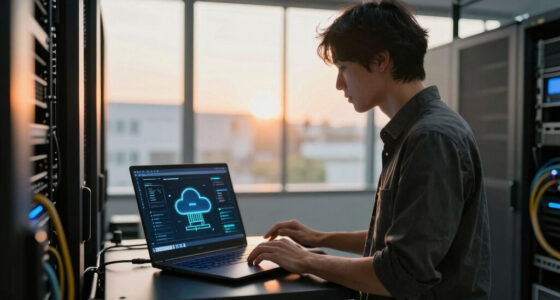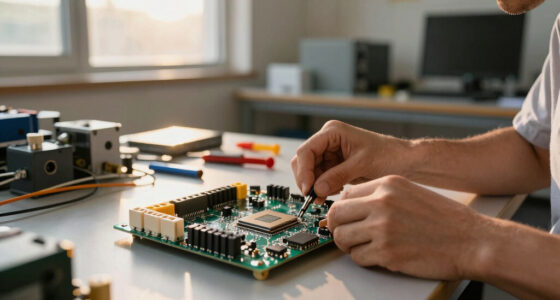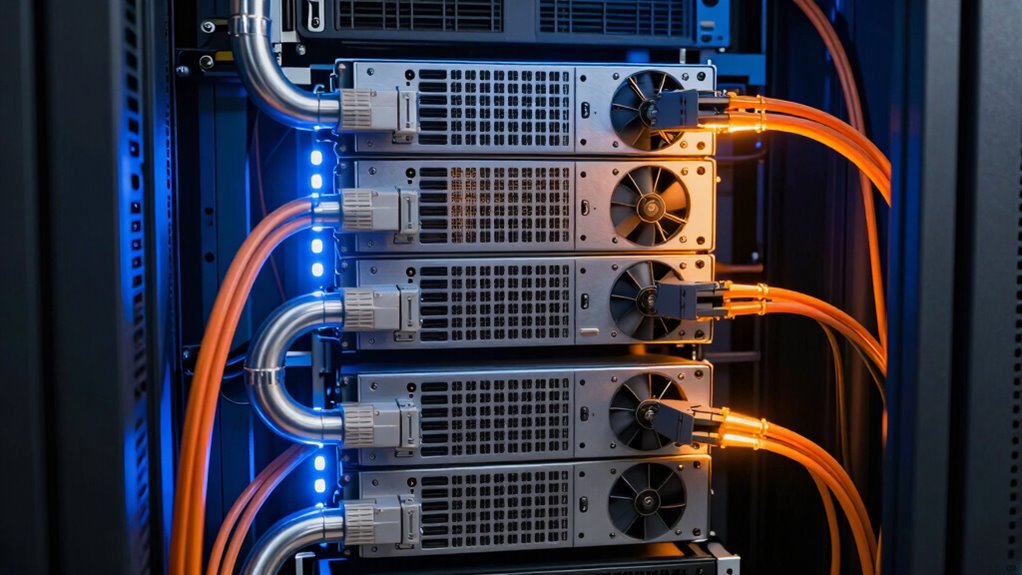
When deciding on local AI hardware, you need to focus on power and cooling first because they are essential for ensuring your system’s reliability, efficiency, and scalability. High-performance AI hardware consumes a lot of energy and produces significant heat, which can cause hardware failures and downtime if not properly managed. Proper power and thermal planning help your setup run smoothly now and support future growth. Keep exploring to discover how these foundational elements can optimize your AI deployment.
Open a free Amazon Business account
Business pricing, bulk buying and tax-exempt orders.
As an affiliate, we earn on qualifying purchases.
Key Takeaways
- Power and cooling are essential to prevent hardware failures and ensure continuous AI system operation.
- Efficient power and thermal management optimize data center performance and reduce operational costs.
- Proper infrastructure planning supports hardware scalability and simplifies future upgrades.
- Managing heat output extends hardware lifespan and maintains data privacy and reliability.
- Starting with power and cooling ensures sustainable, high-performance AI deployment at any scale.
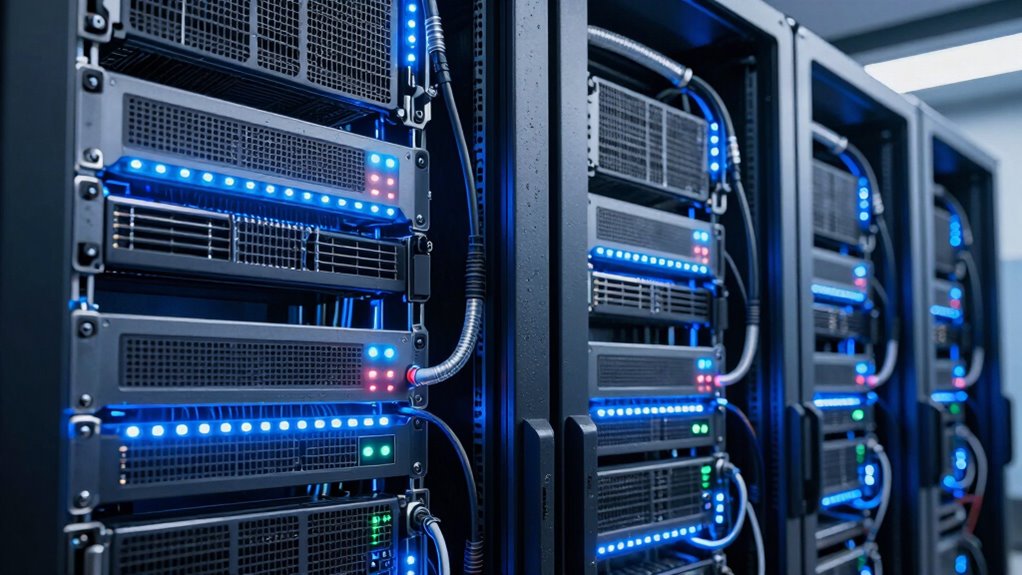
Deciding on the right AI hardware for local deployment is fundamental as more organizations prioritize data privacy, latency, and cost-efficiency. When you’re considering edge computing, it’s clear that processing data close to its source offers significant advantages. But to truly enhance your setup, you need to start with the basics: power and cooling. These elements aren’t just operational costs—they’re foundational to maintaining data center efficiency and guaranteeing your AI hardware performs reliably.
Power consumption directly impacts your overall costs and the sustainability of your operation. High-performance AI hardware demands substantial energy, especially when deployed at the edge. If your power supply isn’t robust or efficient, you risk hardware failures, increased downtime, and higher operational expenses. Choosing hardware that balances power needs with efficiency helps you control costs and reduces environmental impact. This is particularly important in edge environments, where space and resources are often limited compared to traditional data centers. Energy efficiency is therefore a critical consideration that influences long-term operational success.
Efficient power use is vital for cost control, sustainability, and reliable edge AI hardware performance.
Cooling is equally essential. AI hardware generates a significant amount of heat, and if it isn’t managed properly, it can lead to overheating, hardware degradation, or even system failure. In edge locations, cooling options may be constrained, making effective thermal management even more important. Efficient cooling solutions ensure your hardware stays within ideal temperature ranges, which prolongs its lifespan and maintains peak performance. Proper cooling also minimizes energy waste, contributing to overall data center efficiency. Implementing thermal management strategies is vital to prevent costly hardware damage and ensure consistent performance.
Starting with power and cooling decisions influences your entire infrastructure. When you select hardware that’s designed for energy efficiency and manageable thermal output, you’re setting the stage for smoother operation and easier scalability. This allows you to deploy AI models locally without constantly worrying about hardware overheating or power shortages. It also helps you keep operational costs predictable and lower, which is essential in competitive markets. Additionally, understanding the power and cooling requirements enhances your ability to plan for future upgrades and infrastructure needs.
In essence, your choice of AI hardware should be driven by a clear understanding of the power and cooling requirements. These factors are intertwined with your goals of data privacy, minimizing latency, and maximizing cost-efficiency. By prioritizing efficient power use and thermal management from the outset, you set up a reliable and sustainable environment. This focus on foundational infrastructure ensures your edge computing setup can deliver high performance, maintain data center efficiency, and adapt to future AI advancements without unnecessary interruptions.
As an affiliate, we earn on qualifying purchases.
Frequently Asked Questions
How Do Power and Cooling Impact AI Hardware Performance?
Power and cooling directly impact your AI hardware performance by ensuring hardware integration runs smoothly and efficiently. Adequate power prevents hardware from throttling or shutting down unexpectedly, while effective cooling maintains ideal operating temperatures. This stability allows you to focus on software optimization without hardware disruptions. Poor power and cooling can lead to reduced performance, faster hardware wear, and increased downtime, ultimately hindering your AI system’s effectiveness and longevity.
What Are the Long-Term Cost Implications of Cooling Solutions?
Cooling solutions can considerably impact your long-term costs by increasing energy use, which affects operational expenses. Investing in energy-efficient cooling and integrating renewable energy sources can lower these costs over time. Additionally, adopting sustainability initiatives not only reduces your carbon footprint but also enhances your company’s reputation. While initial investments may be higher, the savings on energy bills and the positive environmental impact make sustainable cooling solutions a smart, cost-effective choice in the long run.
How Can Energy Efficiency Be Optimized in AI Hardware Setups?
To optimize energy efficiency in your AI hardware setups, focus on reducing energy consumption through hardware optimization. Choose energy-efficient components, such as low-power CPUs and GPUs, and implement dynamic power management settings. Additionally, guarantee your cooling solutions are effective to prevent overheating, which can increase energy use. Regularly monitor system performance to identify inefficiencies and fine-tune configurations, ultimately lowering energy costs and extending hardware lifespan.
What Emerging Cooling Technologies Are Best for AI Hardware?
You should consider emerging cooling technologies like liquid cooling and phase change cooling. Liquid cooling efficiently transfers heat away from components, reducing temperature fluctuations and improving performance. Phase change cooling, on the other hand, absorbs heat through vaporization, maintaining stable temperatures even under intense workloads. Both technologies provide precise thermal management, lower energy consumption, and enable higher hardware density, making them ideal choices for advanced AI hardware setups.
How Does Ambient Temperature Affect AI Hardware Reliability?
Ambient temperature directly impacts your AI hardware reliability. When temperatures are too high, components can overheat, leading to system failures or reduced lifespan. Conversely, cooler environments help maintain peak performance and prevent thermal stress. You should monitor ambient temperature closely and guarantee proper cooling measures are in place. Maintaining a stable, moderate temperature environment is essential for prolonging hardware life and securing consistent AI processing performance.
enterprise power supply units for AI servers
As an affiliate, we earn on qualifying purchases.
As an affiliate, we earn on qualifying purchases.
Conclusion
When choosing local AI hardware, don’t overlook power and cooling—they’re the backbone of reliable performance. Some might think these factors add complexity or cost, but neglecting them risks hardware failure and downtime. By prioritizing efficient power and cooling solutions from the start, you guarantee your AI setup runs smoothly, saving you money and headaches down the line. So, before diving into specs, remember: a well-cooled, power-efficient system keeps your AI working at its best.
thermal management systems for data centers
As an affiliate, we earn on qualifying purchases.
As an affiliate, we earn on qualifying purchases.
edge computing cooling equipment
As an affiliate, we earn on qualifying purchases.
As an affiliate, we earn on qualifying purchases.
Fall yard work Picks
leaf blowers
As an affiliate, we earn on qualifying purchases.