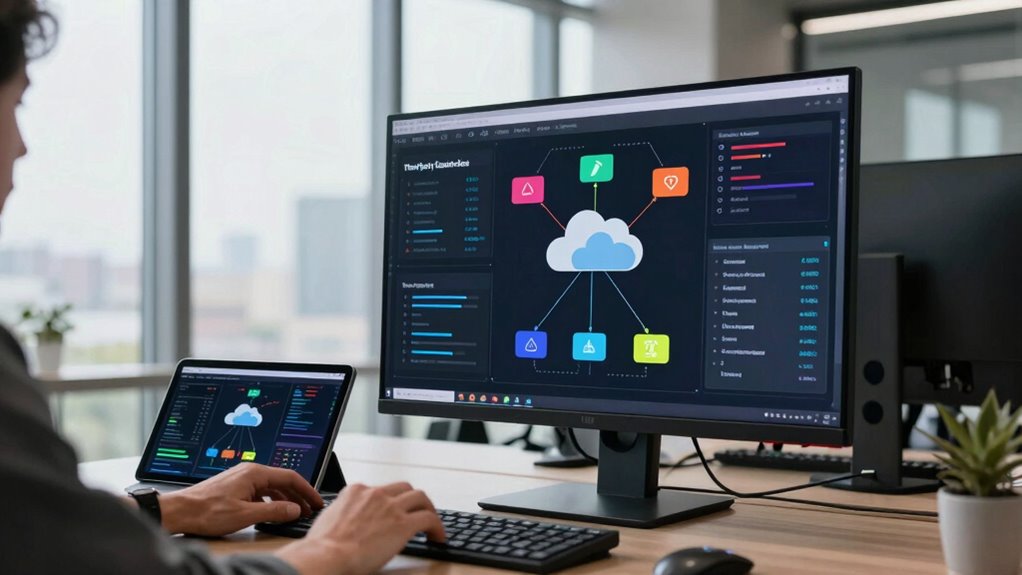

NIS2 requires you to actively manage your third-party cloud dependencies by verifying their compliance with security and resilience standards. You must monitor your cloud providers continuously, ensuring they meet regulatory requirements and implement strong security controls. Clear contractual obligations and regular audits are essential to reduce vulnerabilities. This shift from trust to active oversight helps protect your organization from penalties, financial loss, and reputational damage. Keep exploring to understand how to stay ahead with effective cloud dependency planning.
Key Takeaways
- Organizations must actively verify and monitor cloud vendors’ compliance with NIS2 security standards.
- Incorporate ongoing risk assessments and security audits for cloud service providers.
- Establish clear contractual obligations, including incident response and security controls.
- Integrate cloud dependency management into overall cybersecurity and risk mitigation strategies.
- Maintain continuous oversight to adapt to evolving regulations and ensure long-term security resilience.
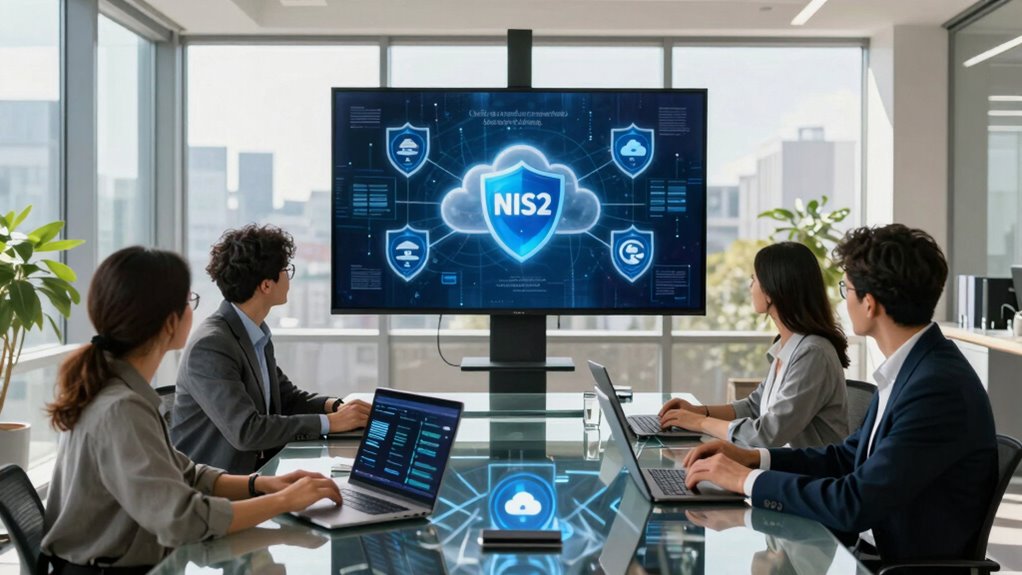
As organizations increasingly rely on cloud services, understanding how NIS2 influences cloud dependency planning becomes vital. The directive emphasizes the importance of managing third-party risk, especially when outsourcing critical functions to cloud providers. Under NIS2, you’re expected to guarantee your cloud partners meet specific security and resilience standards, which directly impacts your organization’s overall cybersecurity posture. This means you can no longer simply trust that your cloud vendors are compliant; you need to actively verify and monitor their compliance with the directive’s requirements.
Proactively verify and monitor your cloud providers’ compliance to strengthen your organization’s cybersecurity under NIS2.
NIS2 broadens the scope of security obligations, making cloud compliance a central element of your risk management strategy. You’re responsible for evaluating your third-party providers’ security measures, ensuring they align with NIS2’s standards, and continuously monitoring their performance. This proactive approach helps prevent vulnerabilities that could arise from dependencies on cloud services. If a cloud provider experiences a breach or fails to meet security requirements, your organization could face regulatory penalties, financial loss, or damage to reputation. Consequently, incorporating rigorous third-party risk assessments into your cloud dependency planning isn’t optional anymore; it’s a necessity. Additionally, understanding the specific security standards mandated by NIS2 ensures your organization remains aligned with evolving legal requirements.
Furthermore, NIS2 encourages organizations to adopt an all-encompassing approach to cloud security. This involves establishing clear contractual obligations with cloud providers, including clauses that specify compliance requirements and incident response procedures. You should also guarantee that your cloud providers implement robust security controls and provide transparency about their security practices. By doing so, you’re helping guarantee that your cloud environment remains resilient and compliant with the directive’s mandates. This also means regularly auditing and testing your cloud providers’ security measures to identify and address any gaps proactively. Third-party risk management becomes a critical component in maintaining ongoing compliance and security. Staying informed about regulatory changes and industry best practices related to cloud security standards will help you adapt your strategies over time.
In practical terms, you’ll need to integrate cloud compliance checks into your overall cybersecurity framework. This includes maintaining detailed records of your third-party risk assessments, compliance certifications, and security audits. It’s vital to foster a collaborative relationship with your cloud providers, emphasizing transparency and shared responsibility. When you prioritize third-party risk management within your cloud dependency planning, you’re better positioned to adapt quickly to evolving regulatory requirements and emerging threats. Ultimately, NIS2 pushes you to view your cloud dependencies not as static relationships but as dynamic components requiring ongoing oversight and management to keep your organization secure and compliant. Incorporating compliance monitoring into your strategy is essential to sustain long-term security and regulatory adherence.
As an affiliate, we earn on qualifying purchases.
Frequently Asked Questions
How Will NIS2 Affect Existing Third-Party Cloud Contracts?
NIS2 will likely prompt you to revisit your existing third-party cloud contracts, emphasizing vendor transparency and security measures. You may need to renegotiate terms to guarantee compliance, demanding clearer information about your vendors’ cybersecurity practices. This could involve updating contractual obligations, implementing stricter oversight, and ensuring transparency in data handling. Staying proactive helps you manage risks effectively and aligns your agreements with the new regulatory requirements.
What Are the Penalties for Non-Compliance Under NIS2?
If you don’t comply with NIS2, you face hefty penalties, including fines up to 10 million euros or 2% of your global turnover. Non-compliance requires you to implement robust data encryption and incident reporting protocols; failure to do so could result in sanctions. You’ll also need to demonstrate your security measures, or risk damaging your reputation and facing legal consequences for neglecting essential cybersecurity standards.
How Can Companies Assess Their Cloud Supply Chain Risks?
To assess your cloud supply chain risks effectively, start with a thorough risk assessment—identify vulnerabilities, dependencies, and potential threats. Map your supply chain, scrutinizing each third-party provider’s security practices. Conduct regular audits, monitor compliance, and stay updated on industry standards. By systematically scrutinizing your supply chain, you can spot weaknesses early, strengthen security, and guarantee resilience against cyber threats, aligning with NIS2’s rigorous compliance requirements.
Will NIS2 Require New Cybersecurity Certifications for Cloud Providers?
Yes, NIS2 will likely require new cybersecurity certifications for cloud providers. You’ll need to guarantee they meet updated cybersecurity standards and go through specific certification processes to demonstrate compliance. This means reviewing their security measures and verifying they align with NIS2’s stricter requirements. Staying proactive, you should work closely with cloud providers to understand these certifications and ensure your supply chain remains resilient and compliant with evolving regulations.
How Often Should Organizations Review Their Third-Party Cloud Security Measures?
You should review your third-party cloud security measures regularly—at least quarterly—to stay ahead of potential threats. Think of it as keeping your finger on the pulse; frequent vendor evaluation helps you spot vulnerabilities early and strengthen risk mitigation strategies. By consistently evaluating your cloud provider’s security posture, you guarantee compliance, reduce risks, and maintain a resilient infrastructure, especially with evolving regulations like NIS2.
third-party risk assessment software
As an affiliate, we earn on qualifying purchases.
As an affiliate, we earn on qualifying purchases.
Conclusion
As you navigate the shifting sands of NIS2, remember it’s like steering a ship through turbulent waters—your cloud dependencies are the sails catching the wind. By proactively aligning your planning, you guarantee your digital vessel remains steady amid the storm. Embrace these regulations not as obstacles but as the lighthouse guiding you toward resilient, compliant shores. With strategic foresight, you’ll turn the tide in your favor, transforming potential chaos into a harmonious voyage.
As an affiliate, we earn on qualifying purchases.
NIS2 compliance monitoring solutions
As an affiliate, we earn on qualifying purchases.
As an affiliate, we earn on qualifying purchases.