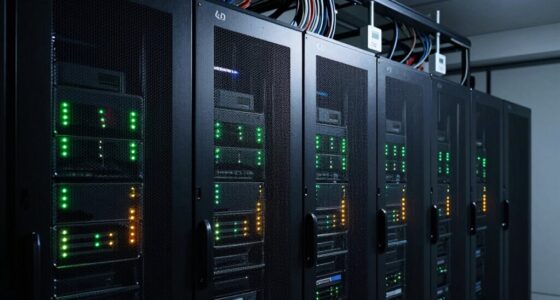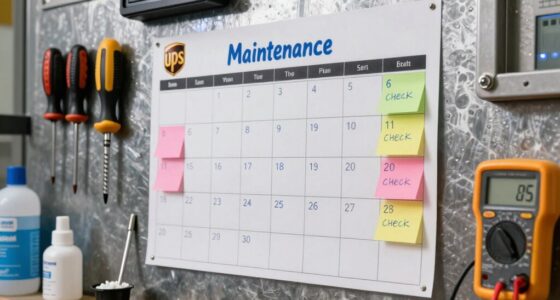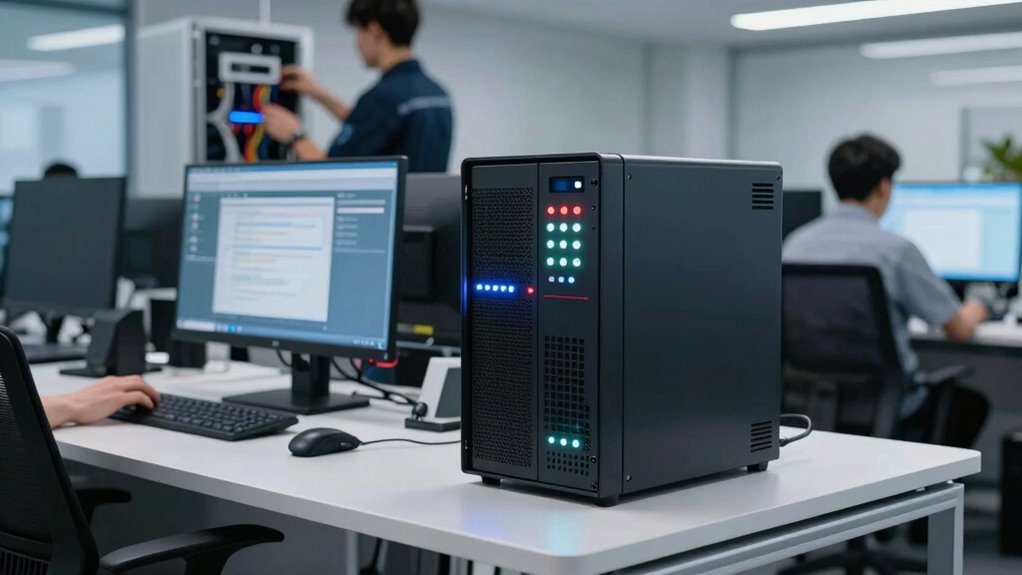

Power protection is vital in your business continuity plan because outages can lead to delays, data loss, and unhappy customers. By including reliable power backup systems, like energy-efficient solutions and renewable sources, you can keep operations running smoothly during disruptions. Smart power protection reduces downtime and operational costs while supporting sustainability goals. If you want to understand how to create a resilient and eco-friendly power strategy, you’ll find useful insights ahead.

Get business pricing on networking and server gear
- Business-only prices and quantity discounts
- Tax-exempt purchasing
- Multiple users, one account, clear invoices
Key Takeaways
- Power outages can cause operational disruptions, data loss, and customer dissatisfaction, making power protection essential for continuity.
- Incorporating energy-efficient and renewable solutions enhances resilience and reduces dependency on unreliable grid power.
- A comprehensive power protection plan ensures quick recovery and minimizes downtime during unexpected outages.
- Sustainable power strategies improve operational costs, environmental impact, and brand reputation.
- Power protection integrates with overall business resilience, supporting long-term operational stability and growth.
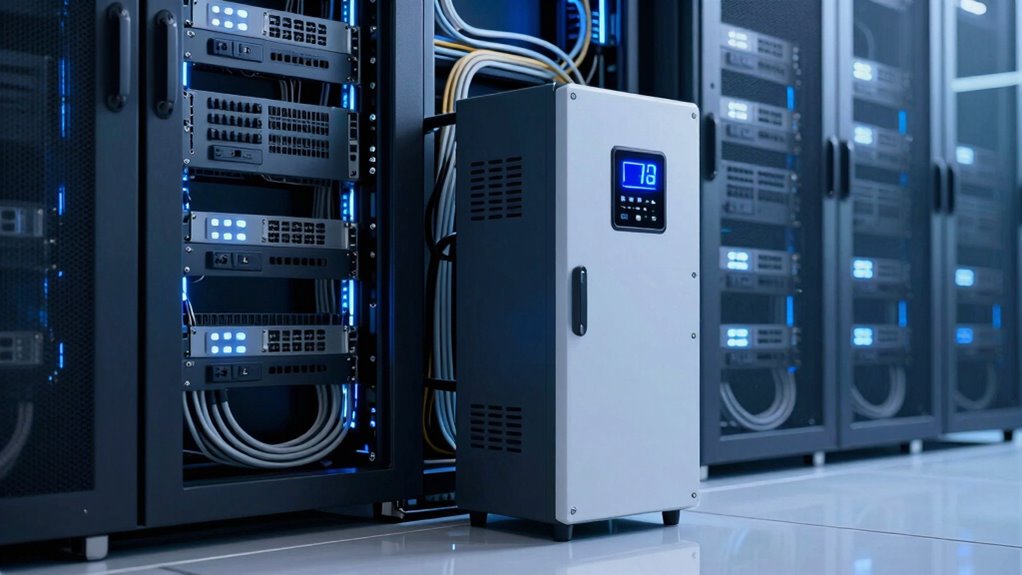
Have you ever considered what happens to your business operations when the power suddenly goes out? It’s a moment that can disrupt everything—causing delays, lost data, and frustrated customers. Including power protection in your business continuity plans isn’t just a precaution; it’s a necessity. Power interruptions can strike unexpectedly, whether from storms, grid failures, or equipment malfunctions. When they do, your ability to maintain operations depends on how prepared you are. That’s where integrating robust power protection measures becomes essential, especially as energy efficiency and renewable sources become more accessible and cost-effective.
Incorporating energy efficiency into your power protection strategy helps reduce overall consumption, making it easier to sustain operations during outages. Using energy-efficient backup systems, like LED lighting or efficient uninterruptible power supplies (UPS), minimizes energy waste and ensures your backup resources last longer. This not only conserves resources but also keeps your operational costs in check. Plus, energy-efficient systems are often more reliable and require less maintenance, which means less downtime in critical moments. Additionally, adopting renewable energy sources can further enhance your resilience by providing cleaner, more sustainable power options. Integrating these sources can also help your business meet sustainability goals and comply with environmental regulations.
Renewable sources, such as solar or wind energy, also play a crucial role in your power protection plan. They provide sustainable, often independent, energy solutions that can supplement or even replace traditional backup power sources. For instance, installing solar panels with battery storage can create a resilient energy system that continues to supply power during grid outages. This reduces your dependence on fossil fuels and grid stability, offering a more dependable and environmentally friendly way to keep essential systems running. Additionally, renewable sources can sometimes qualify for incentives or tax credits, making them a financially attractive option. Incorporating energy-efficient technologies and renewable sources together can amplify your resilience and reduce operational costs. Employing energy storage solutions alongside renewable systems can further enhance your business’s ability to operate smoothly during outages.
By including these renewable sources in your business continuity plan, you’re not just safeguarding against power disruptions—you’re also moving toward a more sustainable future. This proactive approach ensures your business can swiftly recover from outages, with minimal interruptions. It demonstrates to clients and stakeholders that you’re committed to operational resilience and environmental responsibility. Furthermore, integrating renewable energy solutions into your power protection setup can enhance your brand reputation, especially as more consumers and partners prioritize sustainability.
Ultimately, power protection isn’t just about installing backup generators; it’s about creating a broad approach that leverages energy efficiency and renewable sources. This strategy reduces vulnerability, cuts costs, and supports your company’s sustainability goals. When you make power protection a core part of your business continuity plan, you’re not just preparing for disruptions—you’re building a stronger, more resilient future for your business. Incorporating biodiversity and sustainable practices into your operations can further enhance your resilience and environmental impact.
uninterruptible power supply UPS for business
As an affiliate, we earn on qualifying purchases.
As an affiliate, we earn on qualifying purchases.
Frequently Asked Questions
How Often Should Power Protection Systems Be Tested?
You should test your power protection systems at least twice a year. During these tests, focus on battery maintenance to make sure your batteries are holding charge and functioning properly. Check surge suppression devices to confirm they’re working and protecting your equipment. Regular testing helps identify potential issues early, preventing outages or damage, and guarantees your power protection remains reliable when you need it most.
What Is the Cost of Implementing Power Protection?
Think of power protection as a sturdy shield guarding your business’s future. The cost of implementation varies based on your needs, but a thorough cost analysis and risk assessment reveal it’s a small price to pay for peace of mind. Investing in reliable power protection minimizes downtime, safeguards data, and guarantees continuity. The true cost lies in neglect—potential losses and damage that could cripple your operations without it.
Are There Industry-Specific Power Protection Standards?
Yes, there are industry-specific power protection standards you need to follow. Your organization must adhere to industry compliance and safety regulations, which often specify power protection requirements. These standards help guarantee your equipment stays safe during outages or power fluctuations. By aligning your power protection systems with these regulations, you reduce risks and improve overall safety, ensuring your business remains resilient and compliant in your specific industry.
How Does Power Protection Affect Disaster Recovery Time?
Power protection considerably reduces disaster recovery time; studies show that poor power quality causes 70% of industrial outages. When you implement outage prevention measures, you minimize unexpected power disruptions, which helps keep critical systems running smoothly. This accelerates recovery efforts, as less time is spent restoring power and data. By prioritizing power protection, you guarantee faster recovery, reduce downtime, and maintain business continuity in the face of unforeseen events.
What Are the Latest Advancements in Power Protection Technology?
You should know that the latest advancements in power protection tech include smarter energy storage solutions and integration with smart grids. These innovations enable real-time energy management, reduce outages, and improve reliability. You can leverage advanced battery systems that store energy during low demand and release it during peaks. Additionally, smart grid technology allows your business to detect and respond to power issues swiftly, ensuring continuous operations and minimizing disruptions.
As an affiliate, we earn on qualifying purchases.
Conclusion
Think of your business as a ship sailing through unpredictable waters. Without power protection, a sudden storm—like a blackout—can threaten to sink it. Including power protection in your business continuity plan acts as a sturdy anchor, keeping you grounded during turbulent times. By safeguarding your power sources, you guarantee your operation stays afloat, no matter the storm. Don’t wait for the tide to turn—fortify your ship now to navigate smoothly through any challenge ahead.
energy-efficient backup generator
As an affiliate, we earn on qualifying purchases.
As an affiliate, we earn on qualifying purchases.
renewable energy power system for business
As an affiliate, we earn on qualifying purchases.
As an affiliate, we earn on qualifying purchases.
Evergreen bestsellers Picks
bestsellers
As an affiliate, we earn on qualifying purchases.