
Tiny server rooms are more vulnerable to environmental issues because they lack extensive cooling and monitoring systems. Temperature fluctuations, humidity spikes, and dust buildup can quickly cause hardware failures and costly downtime. Poor airflow creates hot spots, shortening equipment lifespan, and small spaces make it harder to add backup cooling. By better monitoring and optimizing airflow, you can prevent issues before they escalate. Keep exploring to discover how proactive measures keep your server room safe and efficient.

Get business pricing on networking and server gear
- Business-only prices and quantity discounts
- Tax-exempt purchasing
- Multiple users, one account, clear invoices
Key Takeaways
- Small server rooms are more vulnerable to environmental fluctuations like temperature, humidity, and dust, risking hardware damage.
- Limited space restricts cooling options, making precise environmental monitoring essential for optimal airflow management.
- Real-time monitoring enables quick responses to environmental deviations, preventing costly hardware failures.
- Poor airflow causes hot spots, reducing equipment lifespan and increasing maintenance needs in confined spaces.
- Strategic environmental oversight ensures reliability, extends equipment longevity, and maximizes existing cooling efficiency.
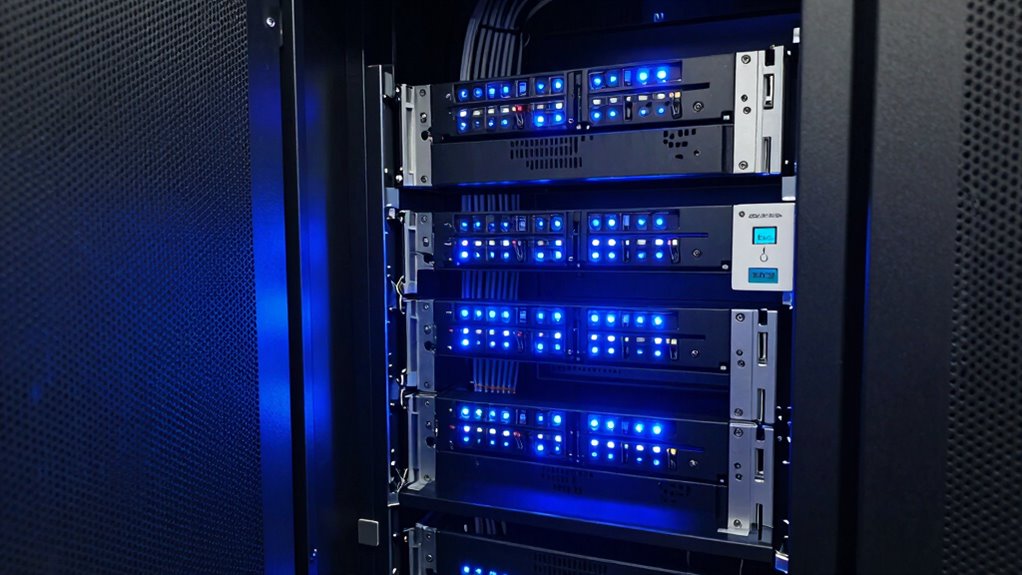
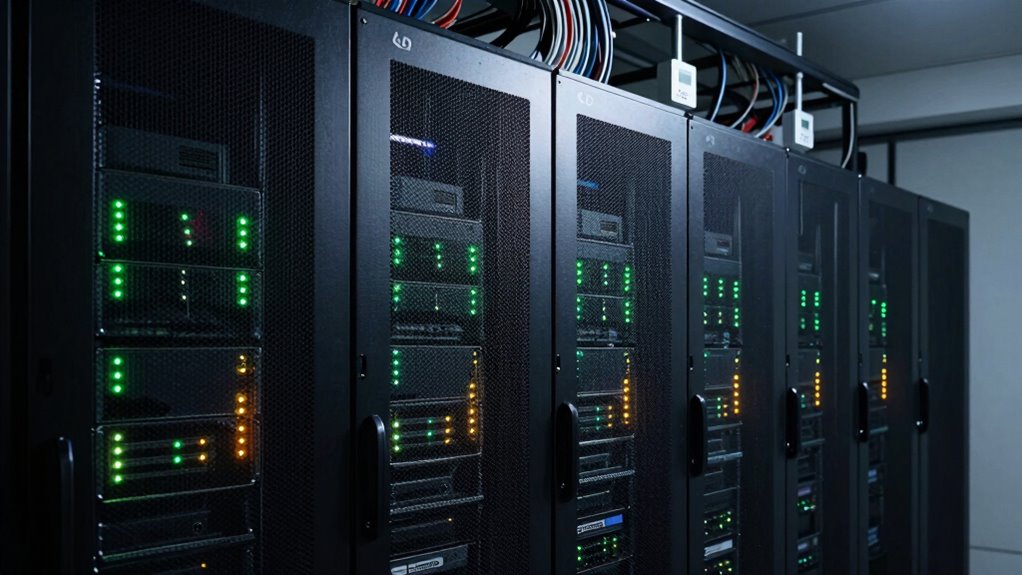
Have you ever considered how vulnerable small server rooms are to environmental issues? These compact spaces often lack the extensive cooling and monitoring systems that larger data centers rely on, making them particularly susceptible to temperature fluctuations, humidity spikes, and dust buildup. Without proper oversight, even minor environmental changes can lead to significant problems. That’s why investing in better environmental monitoring is essential for maintaining the integrity of your equipment and avoiding costly downtime.
Small server rooms are highly vulnerable to environmental issues without proper monitoring and airflow management.
One of the most effective ways to safeguard your small server room is through airflow optimization. When airflow isn’t properly managed, hot spots develop, forcing cooling systems to work harder and sometimes fail to cool critical hardware effectively. Poor airflow also increases the risk of overheating, which can shorten the lifespan of your equipment. By implementing sensors and smart airflow management solutions, you can identify areas where airflow is restricted or uneven. This allows you to make targeted adjustments, like repositioning vents or adding fans, to guarantee consistent cooling. Not only does this prevent overheating, but it also enhances the overall efficiency of your cooling system, reducing energy consumption and operational costs.
Environmental monitoring tools provide real-time data on temperature, humidity, and particulate matter, giving you the insights needed to make informed decisions quickly. For example, if a sensor detects rising temperatures in a specific rack, you can respond immediately—perhaps by increasing airflow or relocating equipment—before the hardware becomes damaged. Continuous monitoring also helps you establish baseline conditions, so you can spot deviations early. This proactive approach minimizes the risk of hardware failures, extends equipment lifespan, and ensures your server room operates smoothly. Additionally, biodiversity considerations in your environment can help reduce dust and other particulates, further protecting sensitive hardware. Incorporating environmental data into your maintenance routine enhances your ability to respond swiftly to potential issues. Regularly reviewing this data can also help you implement preventative measures based on environmental trends observed over time.
In small server rooms, where space constraints limit the ability to add redundant cooling systems, the importance of precise environmental control becomes even more apparent. Regular monitoring and airflow management help you maximize the effectiveness of existing cooling efforts. With better data, you can fine-tune your environment, preventing issues before they escalate into costly repairs or replacements. Ultimately, small server rooms benefit greatly from a strategic approach to environmental monitoring—protecting your investment, improving equipment longevity, and maintaining reliable operation.
You don’t have to wait for a disaster to realize the importance of environmental oversight. By prioritizing airflow optimization and continuous monitoring, you empower yourself to keep your server room safe, efficient, and long-lasting.
environmental monitoring sensors for server room
As an affiliate, we earn on qualifying purchases.
As an affiliate, we earn on qualifying purchases.
Frequently Asked Questions
How Often Should Environmental Sensors Be Calibrated in Tiny Server Rooms?
You should calibrate environmental sensors in tiny server rooms at least once a year to maintain sensor accuracy. Regular calibration guarantees that temperature, humidity, and airflow readings remain precise, preventing equipment overheating or moisture issues. Keep an eye on sensor performance, and if you notice inconsistent readings, recalibrate sooner. Consistent calibration frequency helps you catch potential problems early, ensuring your server room stays ideal and reliable.
What Are the Signs of Environmental Issues in Small Server Rooms?
You’ll notice signs like overheating, which feels like your server’s running a fever, or strange noises indicating airflow issues. Power fluctuations might cause unexpected shutdowns, signaling poor power management. Keep an eye on temperature spikes, humidity swings, or inconsistent airflow—these are warning signs that your environment’s health is compromised. Regularly monitoring helps you catch problems early, ensuring airflow optimization and stable power management, so your tiny server room runs smoothly like a well-oiled machine.
Can Environmental Monitoring Prevent All Server Hardware Failures?
Environmental monitoring can’t prevent all server hardware failures, but it considerably reduces risks. By tracking temperature fluctuations and airflow management, you can detect issues early and maintain ideal conditions. This proactive approach helps avoid overheating, humidity problems, and airflow blockages, which often cause failures. While it won’t eliminate every problem, proper monitoring guarantees you catch potential issues before they escalate, keeping your server hardware safer and more reliable.
What Are the Cost Implications of Upgrading Monitoring Systems?
Upgrading monitoring systems can initially seem costly, but a recent study shows that effective environmental monitoring reduces maintenance costs by up to 30%. You’ll need to take into account a detailed cost analysis to balance upfront expenses against long-term savings. While installation may require some investment, improved monitoring minimizes hardware failures and associated repairs, ultimately lowering your overall maintenance costs and ensuring your server room operates smoothly and efficiently.
How Does Humidity Specifically Impact Server Performance?
High humidity levels can cause condensation inside your server, risking hardware damage and reducing server efficiency. Conversely, low humidity increases static electricity, which can also harm components. Humidity control maintains ideal levels, preventing these issues and ensuring your servers operate smoothly. Proper environmental monitoring helps you detect humidity fluctuations early, safeguarding your equipment and improving overall server performance. This proactive approach keeps your tiny server room running reliably.
small server room airflow management tools
As an affiliate, we earn on qualifying purchases.
As an affiliate, we earn on qualifying purchases.
Conclusion
In small server rooms, paying closer attention to environmental conditions isn’t just smart—it’s essential. A little oversight can quietly lead to bigger issues down the line, like equipment wear or unexpected downtime. By staying proactive with better monitoring, you’re gently safeguarding your investments and ensuring smooth operation. Think of it as giving your servers a cozy, well-maintained home where they can perform at their best without any unnecessary fuss.
rack temperature and humidity monitor
As an affiliate, we earn on qualifying purchases.
As an affiliate, we earn on qualifying purchases.
dust and particulate sensor for server room
As an affiliate, we earn on qualifying purchases.
As an affiliate, we earn on qualifying purchases.
Columbus Day / Indigenous Peoples' Day Picks
long weekend sales
As an affiliate, we earn on qualifying purchases.